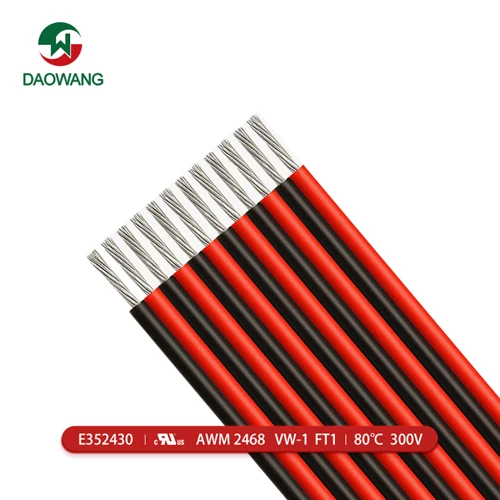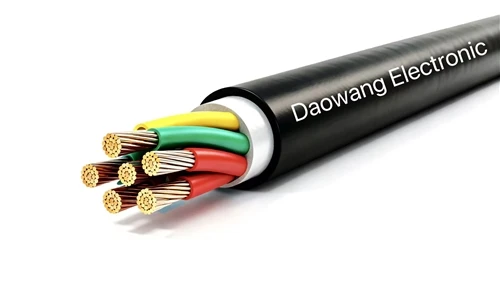
In modern electronic devices, industrial equipment, and scientific instruments, internal wiring demands exceptionally high levels of safety and reliability. While standard hook-up wire typically carries a voltage rating of 300V or 600V, high-voltage hook-up wire is specifically engineered for higher-voltage environments, with ratings reaching several thousand or even tens of thousands of volts. Such wires play a critical role in applications including X-ray equipment, laser power supplies, high-voltage power systems, and electrostatic equipment.
What is High Voltage Hook Up Wire?
The term "Hook-up wire" generally refers to single-core insulated wire for point-to-point wiring inside an equipment, as opposed to multi-core cable. Standard hook-up wire is used in low voltage low current enclosed electronic systems. Conversely, high-voltage versions have increased insulation thickness, dielectric strength and corona resistance, allowing them to safely withstand continuous high-voltage stress and avoid arcing, dielectric breakdown or flashover.
Important requirements for high voltage hook-up wire are:
-
High dielectric strength : The insulation layer is well insulated from the high voltage.
-
Corona and ozone resistance Resistance to degradation of insulation by corona discharges under high-voltage conditions.
-
Meets appropriate temperature range and mechanical properties Flexibility, abrasion resistance and temperature tolerance
-
Certification compliance: Standard UL AWM (Appliance Wiring Material) certification to meet safety standards.

The conductors are normally stranded tinned copper (a compromise between conductivity and oxidation resistance) and the insulation materials (PVC, silicone rubber, PTFE or Hypalon) are selected for the application. The voltage ratings vary from a few kilovolts to 40 kV or more, depending on the insulating material and the wall thickness.
Examples of typical products: UL10093 and other common models
UL10093 is a typical high-voltage, flexible PVC hook-up wire. According to its specifications, UL Style 10093 features extruded PVC insulation, a voltage rating of 3000V AC, an operating temperature range of -40°C to +105°C, and compliance with the VW-1 flame test. It offers excellent mechanical strength, abrasion resistance, electrical insulation properties, thermal stability, low-temperature flexibility, chemical resistance, and overall pliability, making it particularly suitable for applications involving frequent flexing or confined installation spaces.
Similar products include:
①UL3239: Silicone rubber-insulated high-voltage wire with a temperature rating of 150°C (up to 200°C for some versions) and voltage ratings ranging from 5kV to 25kV or higher (up to 40kV DC for certain models); widely used in applications requiring high dielectric strength and high-temperature resistance.
②Other high-voltage types: Such as FEP- or PTFE-insulated high-voltage wire, and specialized ultra-flexible silicone rubber high-voltage wire.
The following table compares several common types of high-voltage hook-up wire for easy reference:
|
UL Style |
Insulation material | Key Features and Application Scenarios |
|
UL10093 |
PVC | Super flexible, wear-resistant and with good chemical stability; Internal wiring and equipment connection |
| UL3239 | Silicone rubber | High dielectric strength, easy to peel off, high temperature resistance; X-rays, lasers, heaters |
| Silicone rubber high-voltage wire | Silicone rubber |
High flexibility and corona resistance; Dynamic application, ignition system |
| FEP/PTFE High-Voltage Wire | Teflon | Chemically inert, thin-walled; Aerospace, precision instruments |
Application Scenarios and Real-World Cases
For high-voltage hook-up wire, "higher" is not necessarily "better"; the choice depends on matching specific voltage, temperature, environmental, and mechanical requirements. Typical applications include:
· Medical and Scientific Equipment: Devices such as X-ray machines, image intensifiers, and photomultiplier tubes require high voltages in the kilovolt range. UL3239 silicone rubber wire is frequently used for internal high-voltage leads in this equipment due to its high dielectric strength and temperature resistance, ensuring long-term stable operation and minimizing the risk of dielectric breakdown.
· Lasers and High-Voltage Power Supplies: High-voltage wires safely transmit energy in applications such as laser power supplies, ion generators, and electrostatic painting equipment. For instance, in industrial laser systems, silicone rubber wires rated for 15kV or higher effectively resist corona discharge while maintaining the flexibility needed for routing within compact enclosures.
· Home Appliances and Industrial Heating: Applications include CRT televisions, heaters, stoves, and dryers. UL3239 is specifically utilized in high-voltage, high-temperature environments found in TV receivers, ovens, and heating units.
· Case Study: Retrofitting Internal Wiring for a High-Voltage Power Supply
A research laboratory upgraded a high-voltage power supply module (with an output of approximately 10–20kV) after the original standard 600V wiring showed signs of insulation aging and partial discharge. Replacing the wiring with UL3239 silicone rubber high-voltage wire (selected with the appropriate AWG and wall thickness) significantly improved system stability, reduced corona noise, and provided the flexibility needed for easy maintenance. Similarly, selecting ozone-resistant high-voltage wire can extend the service life of equipment such as electrostatic precipitators or ozone generators.
· Other Fields: Applications include specific high-voltage leads in aerospace, scientific instrumentation, and ignition systems. While electric vehicle (EV) high-voltage systems primarily utilize specialized high-voltage cables rather than traditional hook-up wire, similar products may still be used for auxiliary internal wiring.

Precautions for selection and use
When selecting high-voltage hook-up wire, key considerations include:
① Voltage Matching: Select a product with a rated voltage higher than the actual operating voltage, ensuring an adequate safety margin (specifically accounting for peak and transient voltages).
② Temperature and Environment: Prioritize silicone rubber or fluoroplastics for high-temperature applications; choose PTFE/FEP for environments involving chemical corrosion.
③ Mechanical Requirements: For applications requiring high flexibility or repeated bending, prioritize ultra-flexible PVC (e.g., UL10093) or finely stranded silicone rubber.
④ Certification and Flame Retardancy: Certifications such as UL, CSA, and VW-1 are fundamental requirements.
⑤ Installation Specifications: Observe minimum bending radii and proper stripping methods to avoid damaging the insulation; ensure proper grounding and shielding for high-voltage applications (where necessary).
Incorrect selection can lead to insulation breakdown, fire, or equipment failure; therefore, always consult manufacturer datasheets and professional suppliers.
Summary
High voltage hook-up wire is used as a high voltage circuit "safety bridge". The cords are built from very flexible PVC products like UL10093 and silicone rubber high voltage cords like UL3239 and come in a wide range of materials and specifications for use from 3kV to tens of kV. Proper selection and use of these wires can greatly enhance system reliability and safety in medical imaging equipment, laser systems, industrial heating or scientific instruments.
With the development of new energy, precision medical technology and industrial automation, the demand for high voltage hook-up wire will be continuously developed. Designers of systems need to do a full evaluation including voltage, temperature, flexibility, certifications, etc. and prototype testing as required.