With the increasing complexity of automobile electronic and electrical systems, the selection of cable directly affects the reliability, safety and service life of vehicles. FLR11Y-A is a low voltage, thin wall automotive cable, which is compliant to the German standards. It is an excellent choice for circuits like starting, charging, lighting, signaling and instrumentation in motorcycles, passenger cars and other motor vehicles of all types. Its good temperature resistance and chemical resistance and flame-retardant properties make it an excellent choice.
What is FLR11Y-A Cable?
FLR11Y-A Cable is a thin-wall, low-voltage automotive cable compliant with ISO 6722 and DIN 72551 standards. In its designation, "FLR" indicates an automotive cable with reduced-wall insulation, "11Y" refers to TPE-U (thermoplastic polyurethane elastomer) insulation material, and "A" typically denotes the conductor construction type (compliant with ISO 6722 Type A).
Main structure:
-
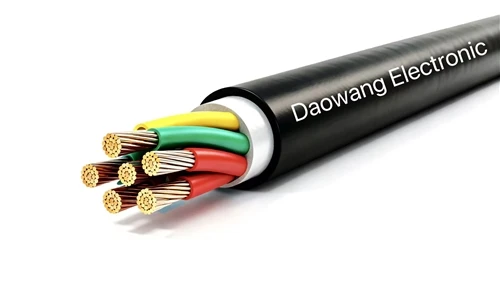
Conductor: Bare copper (Cu-ETP1), stranded, highly flexible.
-
Insulation: TPE-U (thermoplastic polyurethane elastomer), thin-wall design.
-
Rated voltage: Typically 30 VAC / 60 VDC.
-
Operating temperature: -40°C to +100°C
-
Special properties: Flame-retardant; resistant to acids, alkalis, gasoline, and diesel; environmentally friendly (RoHS and REACH compliant).

This thin-wall design significantly reduces wire diameter and weight while maintaining electrical performance, offering a spatial advantage for the compact wiring harness layouts of modern vehicles.
Analysis of the Key Advantages of FLR11Y-A Cable
① Excellent temperature resistance and environmental adaptability
Temperatures fluctuate drastically in engine compartments and under-body areas; standard PVC cables tend to soften and age at high temperatures while becoming brittle at low temperatures. The TPE-U insulation of the FLR11Y-A cable ensures stable, long-term performance within a temperature range of -40°C to +105°C, effectively extending the service life of the wiring harness.
② Outstanding chemical and mechanical resistance
Automotive environments involve exposure to various chemicals, such as fuel, engine oil, brake fluid, and cleaning agents. TPE-U material offers high resistance to acids, alkalis, gasoline, and diesel, while also providing excellent abrasion and hydrolysis resistance.
③ Flame retardancy and safety performance
The cable passes rigorous flame retardancy tests, thereby reducing fire risks. It effectively inhibits flame propagation in the event of a short circuit or overload.
④ Lightweight design and space efficiency
A thin-wall design results in a smaller outer diameter and reduced weight, contributing to overall vehicle weight reduction and optimized harness routing-aligning with the industry trend toward lightweight vehicles.
⑤ High flexibility and ease of processing
The combination of a multi-strand conductor and elastic insulation facilitates routing along complex paths; excellent stripping and crimping characteristics help improve production efficiency.
Comparison Table: FLR11Y-A Cable vs Standard Automotive Cable
| Characteristic | FLR11Y-A (TPE-U thin-wall) | Standard PVC automotive wire (e.g., FLRY) | Conventional thick-wall cable |
| Operating temperature range |
-40℃ ~ +105℃ |
-40℃ ~ +85℃ / +105℃ |
-20℃ ~ +70℃ |
| Insulating material |
TPE-U |
PVC |
PVC / Rubber |
|
Design wall thickness |
Reduced wall thickness | Standard / Reduced | Thick-walled |
| Resistant to fuel and chemical corrosion | Excellent | General | Poor |
| Flame resistance |
Compliant with DIN |
General | General |
| Weight and Outer Diameter | Lighter and thinner | Medium | Heavier and thicker |
| Applicable scene | Starting / Charging / Lighting / Signaling | General low voltage |
Simple Circuits |
As shown in the table above, the FLR11Y-A cable significantly outperforms standard solutions in terms of temperature resistance, chemical resistance, and weight reduction, making it particularly suitable for applications requiring high reliability and space efficiency.
Practical Application Case of FLR11Y-A Cable
Case Study 1: Starting and Charging System Upgrade for a Motorcycle Manufacturer
A popular motorcycle manufacturer was having repeated problems with the starting circuit on a new model. The original standard PVC cables suffered from degradation of the insulation in the engine compartment at elevated temperatures causing increased contact resistance and intermittent open circuits. FLR11Y-A Cables ( 1.5 mm2 specification ) and after two years of road trials and high temperature bench testing ( simulating continuous operation at + 100°C ) the failure rate decreased by over 80%. The thin-wall design also shaved about 12 percent off the overall wiring harness weight and helped optimize the center of gravity of the vehicle. "We have solved all our long-term reliability problems with the oil and temperature resistance of TPE-U," the production manager said.
Case Study 2: Optimization of Passenger Vehicle Instrument Cluster and Signal System Wiring Harnesses
An automotive component supplier provided instrument cluster and signal light wiring harnesses for mid-sized SUVs. The original design utilized standard-wall-thickness cables, resulting in bulky harnesses that were difficult to install and prone to brittle cracking during low-temperature winter testing. By switching to FLR11Y-A cables, the outer diameter was reduced by approximately 15–20%, creating more routing space and improving assembly efficiency. The harnesses passed all low-temperature impact tests (-40°C), and customer feedback indicated that they were more flexible and durable, leading to a significant reduction in after-sales complaints. With an annual consumption exceeding one million meters, the project demonstrated the stability of mass production.
Case Study 3: Application of Commercial Vehicle Lighting and Charging Circuits in Harsh Environments
In field testing on logistics vehicles, vehicles were exposed to long term diesel fuel leaks and road salt spray. The insulation of conventional cables swelled and cracked, while the electrical integrity of FLR11Y-A cable circuits was maintained after 18 months of intensive operation. Fleet maintenance data showed that circuit related repairs were reduced by almost 70% and that in turn reduced maintenance costs.
These cases demonstrate that FLR11Y-A cable is more than just a "better material", it is a solution that delivers lower failure rates, lower total lifecycle costs and higher production efficiency.
Selection and Usage Recommendations
FLR11Y-A cable has thin wall TPE-U insulation. It is heat and chemical resistant, flame retardant and light weight. It is a dependable fundamental element of modern automotive electrical systems. It has proved itself with reliability, efficiency and durability – from motorbikes to passenger cars, from starting circuits to signal systems. As automotive electronics increase in complexity, a standards-compliant high-performance cable such as FLR11Y-A is a wise long-term investment for overall vehicle quality and customer satisfaction.
High quality cables are often the unsung guardians of a vehicle safety and reliability.