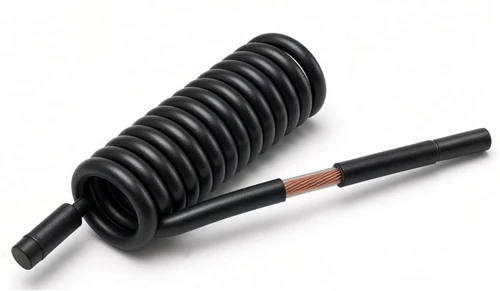
Have you ever thought about the wire that's inside the appliances you use every day – microwaves, electric ovens, coffee makers, hair dryers, etc. – that looks ordinary but is extremely important? It's called UL1331. You may not realize it, but this wire is a critical component that helps to keep these appliances operating safely, even when exposed to high heat, grease or chemical substances. So let's look at its actual uses in our everyday life today.
What is UL1331 wire?
UL1331 is a type of single-core insulated wire covered under the UL 758 standard, "Appliance Wiring Material." Its key characteristics are:
-
Rated voltage: 600V AC
-
Rated temperature: 150°C (for continuous use)
-
Insulation material: Extruded FEP (fluorinated ethylene propylene, a type of Teflon-like material)
-
Conductor range: 30 AWG to 4/0 AWG, solid or stranded copper conductors
-
Flame retardancy: Passes horizontal flame tests; certain specifications also offer optional resistance to oil and gasoline (at 60°C or 80°C)

Practical applications in daily life
The most common application for UL1331 is internal wiring for household appliances. Here are a few real-life, relatable scenarios:
1. Kitchen Appliances: The Challenge of High Heat and Cooking Fumes
Microwave ovens and electric ovens
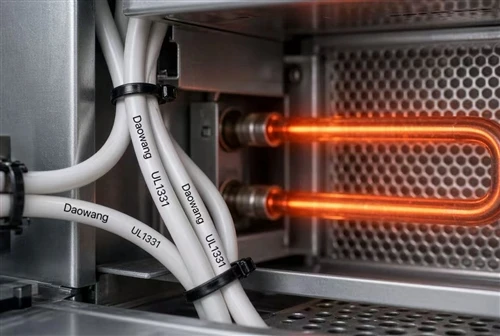
Temperatures near the heating chamber can exceed 100°C, which can cause standard electrical wires to soften. With a temperature resistance of up to 150°C, UL1331 wire is used to connect heating elements to control boards.
Coffee machines and electric kettles
These appliances involve steam and hot water, which place high demands on insulation; the non-hygroscopic (moisture-resistant) properties of FEP effectively prevent short circuits.
Rice cookers and air fryers
This type of wire is frequently used near internal heating elements to ensure electrical safety during prolonged exposure to high temperatures.

2. Personal care appliances: Compact size and high reliability
Appliances such as hair dryers, curling irons, and hair straighteners feature high power density and compact internal space. Because UL1331 wire has a small diameter and thin insulation while remaining heat-resistant, it is particularly well-suited for these personal-care devices. Many mid-to-high-end styling tools utilize FEP-insulated wiring for their internal connections.
3. Small Home Appliances and Electronic Devices
· Internal wiring for electric heaters and space heaters.
· High-temperature components within office equipment, such as printers and copiers.
· Internal connections for certain home medical devices (e.g., the heating modules in electronic blood pressure monitors).
Additionally, this wire is used in the automotive aftermarket and certain industrial applications-specifically near engine compartments or in environments requiring oil resistance-though it is most commonly encountered in the household appliances mentioned above.
Why Choose UL1331? The Data Speaks for Itself
The table below compares common types of electrical wires, helping to illustrate their respective advantages:
|
Wire type |
Maximum continuous operating temperature |
Rated Voltage |
Insulating Material |
Typical daily uses |
Oil resistance/chemical resistance |
| Ordinary PVC wire |
80–105°C |
300–600V |
PVC |
General household socket wires |
Poor |
|
UL1015 |
105°C |
600V |
PVC |
Ordinary connections inside electrical appliances |
General |
|
UL1331 |
150°C |
600V |
FEP |
Ordinary connections inside electrical appliances |
Excellent |
|
UL1330 |
200°C |
600V |
FEP |
Higher temperature industrial/special equipment |
Excellent |
As shown in the table, UL1331 strikes an optimal balance between cost-effectiveness and performance for high-temperature household appliances: it offers superior heat resistance compared to standard PVC, while being more economical and practical than UL1330.
Standards and Testing Behind Safety
The UL1331 designation is not applied arbitrarily. It must pass rigorous testing by UL, including:
-
Insulation thickness requirements (e.g., an average of 20 mils and a minimum of 18 mils for 30–10 AWG)
-
Flame retardancy test
-
Optional gasoline and oil immersion tests
-
Dielectric strength test

These tests ensure that the wires will not fail due to high temperatures or chemical erosion in real-world operating environments. For this reason, products that comply with the UL1331 standard are able to successfully pass safety certification for household appliances and enter the market.
Tips for Use and Purchase
1. Check the markings: Legitimate products will have labels such as "UL Style 1331" or "AWM 1331" printed on the wire surface, along with specified temperature and voltage ratings.
2. Match the application: When repairing or modifying the internal wiring of household appliances, never replace original high-temperature-resistant wires with standard, general-purpose wires.
3. Consider the environment: Although these wires offer good resistance to oil and chemicals, they should still be protected from mechanical damage and excessive bending.
4. Professional installation: Any work involving the internal wiring of electrical appliances should be performed by qualified service personnel to ensure compliance with safety standards.
Conclusion: Invisible safety, yet vital to every single day
While consumers don't often see UL1331 wire, it is an important safety component that ensures microwaves heat food safely, hair dryers continue to perform over time, and ovens maintain consistent temperatures while baking. It is these seemingly inconspicuous materials and standards that are precisely the basic safety standard for modern household appliances.
So next time you use a kitchen appliance or a personal care product, think about how right there next to those hot components, there may be a UL1331 wire quietly doing its job protecting your daily life.
Learning about these unsung heroes helps us make better choices regarding appliance selection and use, and helps us appreciate the small, critical details that only exist for our safety.