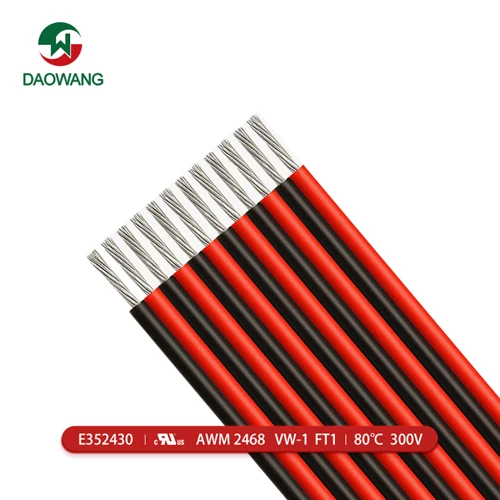
With more and more electronic devices, the quality of the internal interconnection cables directly affects the safety, signal stability and service life of the devices. UL2725 Cable is a popular UL certified multi-core cable (AWM Style 2725) that is used in low voltage electronic devices and USB related connections. Rated voltage 30V, temperature rating typically 60°C or 80°C, it passes the VW-1 vertical flame test and has a PVC outer jacket offering excellent abrasion resistance, flame retardancy and self-extinguishing properties.
What is UL2725 Cable?
UL2725 Cable is one of the Appliance Wiring Material (AWM) series of standards developed by Underwriters Laboratories (UL). It references UL758 and UL1581. It is intended primarily for internal or external wiring of Class 2 systems and is especially suited for signal and power transmission in electronic and audiovisual equipment. The conductors are generally stranded tinned copper wire or bare copper wire (usually 26 AWG). The insulation is typically SR-PVC or PVC. The outer jacket is PVC. Shielding can be aluminum foil , braided , or both . The shield is normally paired with a drain wire to add more resistance to interference.
Key technical specifications include:
-
Rated temperature: 60°C or 80°C
-
Rated voltage: 30V
-
Dielectric strength: Approx. 500V AC/1 minute
-
Flame retardancy rating: VW-1 (passes vertical flame test)
-
Bending radius: Typically 10 times the cable diameter
-
Compliance with environmental standards such as RoHS

These specifications make it an excellent choice for low-voltage applications requiring flexibility and flame retardancy, while keeping costs relatively manageable.
Structural Features and Performance Advantages of UL2725 Cable
A UL2725 cable would typically be: stranded conductors → insulation (color coded for identification) → optional shielding (aluminum foil + braided copper mesh) → PVC jacket . The shielding design not only suppresses the electromagnetic interference (EMI), but also guaranties the integrity of signal, which is particularly significant for the USB data transmission. The tinned copper conductors have a better corrosion resistance and are therefore suitable for long-term use.
The cable maintains a high percentage of tensile strength and elongation after aging tests, and has excellent resistance to thermal shock and low-temperature bending. These features make it flexible and reliable for routing in the limited spaces of everyday electronics.
Real-life application examples
The most classic applications for UL2725 Cable involve USB connections and computer peripherals. Examples include:
-
Computer peripheral connections: Internal wiring or extension cables for keyboards, mice, printers, scanners, modems, and more. Many USB 2.0 cables utilize a similar structure (one signal pair, two power conductors, and shielding); the 30V rating aligns perfectly with USB's low-voltage requirements, ensuring stable data transmission (up to 480 Mbps) and safe charging.
-
Consumer electronics: Game controllers (such as early PlayStation controllers), MP3 players, charging/data cables for tablets, and USB power bank cables. In home entertainment systems, it is used for the internal wiring of audio input/output devices to minimize noise.
-
Audio-visual and recording equipment: Signal transmission cables for recording studios and sound systems. Shielded versions effectively suppress external interference, ensuring clear sound quality.
-
Medical and industrial auxiliary equipment: Internal wiring for non-life-support medical devices (e.g., control signal lines for diagnostic instruments), sensor networks, and low-voltage wiring for PLC control systems. In industrial automation, it serves as signal feedback cabling for robotic arms or automated machinery.
-
Other everyday scenarios: Internal wiring for office equipment (copiers, fax machines), control lines in HVAC systems, and even auxiliary connections for certain automotive diagnostic interfaces. These applications benefit from the cable's small outer diameter, flexibility, and flame-retardant properties, which facilitate installation in tight spaces while reducing fire risks.

Just imagine: when you connect an external hard drive or printer to your laptop, that seemingly ordinary USB cable is likely backed by UL2725 certification, ensuring reliable long-term performance without failure caused by overheating or interference.
Comparison of UL2725 Cable with Other Cables
To provide a clearer understanding of the UL2725 cable, the following table compares its key specifications and applications with those of several common similar or related cables:
| Specifications | UL2725 | UL2464 (standard multi-core) | Standard non-UL USB cable | UL20276 or other high-flexibility cables |
| Rated Voltage | 30V | 300V | Usually unspecified or low voltage | Mostly 30–300V |
|
Flame Resistance |
VW-1 | Usually VW-1 or better | It may not be certified | Depending on the model |
| Typical Structure | Multi-core + optional shielding + PVC |
Multi-core PVC, often without strong shielding |
Simple insulation + sheath | It may pay more attention to flexibility |
| Chief Application | USB, internal wiring of electronic devices | Internal control lines, higher voltage | Low-cost consumer electronics | Mobile devices, frequent bending |
| Anti-interference capability | The blocked version is excellent | Common | Weaker | Visual shielding design |
|
Cost and Safety |
Cost and Safety |
Slightly high | Low, high risk | It depends on the material |
As you can see from the table, UL2725 Cable has some distinct advantages for low voltage USB and precision signal transmission. It has precise voltage matching, optional shielding and comprehensive certification. It is safer and more reliable than standard, uncertified cables. It is lighter, thinner and more flexible than higher-voltage models such as UL2464 making it perfect for use in electronic devices that have limited space available. Other models should be used for applications involving high voltages or in extreme environments. Shielded versions have greater EMI resistance than unshielded multi-core cables and are therefore well suited for audio and high-speed data applications.
When choosing a cable remember that UL2725 is not suitable for high-voltage applications, long-term outdoor use, or as a primary power cable.
Recommendations for Purchase and Use
When selecting UL2725 cables, pay attention to the AWG gauge (typically 24–28 AWG for power lines, with thinner gauges for signal lines), shielding type, jacket color, and length. Products from reputable manufacturers will feature markings on the jacket such as "AWM 2725 XXAWG VW-1 80℃ 30V." During installation, be mindful of the bending radius and avoid excessive stretching; in high-interference environments, prioritize dual-shielded versions.
Overall, UL2725 Cable serves as an "unsung hero" in electronic device cabling, thanks to its cost-effectiveness, safety, and flexibility. From home computer peripherals to professional audio systems, it quietly supports the smooth operation of our daily digital lives. As USB standards evolve and electronic devices become increasingly miniaturized, the importance of such certified cables will only continue to grow. If you are designing or replacing cables, prioritize products with full UL certification to ensure both performance and compliance with safety standards.