Cables used in critical automotive components such as battery leads and engine compartment wiring must provide high heat, flexibility and chemical resistance to meet the demands of today's automotive electrical systems. The FL2G Silicone Rubber Automotive Cable is one of the best products of German standard automotive cables because of the unique advantages of silicone rubber insulation. Standard PVC or cross-linked polyethylene (XLPE) insulated wires tend to age, harden and even crack under long-term high temperature, oil contamination and vibration.
What is FL2G Silicone Rubber Automotive Cable?
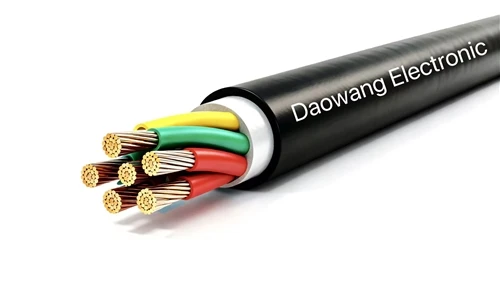
FL2G Silicone Rubber Automotive Cable is a single-core, silicone rubber-insulated low-voltage automotive cable compliant with the ISO 6722 standard.Its typical construction is as follows:
-
Conductor: Cu-ETP1 bare or tinned copper, compliant with DIN standards; stranded construction ensures high flexibility.
-
Insulation: Silicone rubber
-
Operating temperature: Continuous operating temperature range of -40°C to +200°C (some specifications indicate resistance to 3,000 hours of high-temperature aging).
-
Other characteristics: Halogen-free (compliant with IEC 60754-1); resistant to oil, fuel, acids, alkalis, brake fluid, and other organic media; maintains excellent flexibility at low temperatures.
-
Common cross-sections range from 0.5 mm² to 70 mm² (our factory can produce up to 120 mm²); available in a variety of colors (red, black, blue, yellow, gray, brown, white, purple, green, natural, etc.) for easy identification.

The table below lists the technical specifications for some common models:
|
Nominal cross-section (mm²) |
Conductor Construction (Number of Strands / Strand Diameter) |
Maximum conductor diameter (mm) |
Maximum resistance at 20°C (Ω/km) |
Nominal insulation thickness (mm) |
Outer diameter range (mm) |
Approx. weight (kg/km) |
| 0.5 | 16/0.21 | 1.1 | 37.1 | 0.48 | 2.0–2.3 | 8 |
| 1.5 | 30/0.26 | 1.8 | 12.7 | 0.48 | 2.7–3.0 | 17.9 |
| 2.5 | 50/0.26 | 2.2 | 7.6 | 0.56 | 3.3–3.6 | 29.5 |
| 6 | 84/0.31 | 3.4 | 3.14 | 0.64 | 4.6–5.0 | 66 |
| 16 | 126/0.41 | 6.3 | 1.16 | 0.8 | 7.7–8.3 | 173 |
| 35 | 276/0.41 | 9 | 0.527 | 1.04 | 10.4–11.0 | 361 |
| 70 | 360/0.51 | 12.5 | 0.259 | 1.25 | 14.2–15.5 | 750 |
These parameters indicate that FL2G Silicone Rubber Automotive Cable combines low electrical resistance and high mechanical strength with a small outer diameter, making it suitable for automotive wiring in space-constrained applications.
Key Advantages and Comparison
Compared to standard automotive cables, the FL2G silicone rubber automotive cable stands out due to its superior high-temperature resistance and low-temperature flexibility:
· Compared to PVC-insulated cables (such as FLRY): PVC cables are inexpensive and suitable for general in-cabin circuits, but the long-term operating temperature range is usually limited to -40°C to +105°C or +125°C; in the high-heat zones of the engine compartment, they tend to soften, deform or age prematurely. FL2G, in contrast, tolerates continuous temperatures of up to 200°C, which makes it a better choice for high-heat areas around the engine, exhaust system, or battery positive terminals.
· In comparison to cross-linked polyethylene or cross-linked polyolefin cables: These cables have good mechanical strength and temperature resistance up to about 150°C, but generally have poor low temperature flexibility compared with silicone rubber. Silicone rubber is flexible at -40°C so it's less likely to snap during installation or when it vibrates.
· The FL2G silicone rubber automotive cable has been developed as automotive battery lead in comparison with other silicone rubber cables. It complies with the stringent ISO 6722 Class F standards. Its chemical resistance is designed for the automotive environment (exposure to fuels, brake fluid, etc.).
FL2G silicone rubber automotive cable is designed for efficient performance in rugged environments, with high temperature and chemical resistance, vibration and flexibility at low temperature. The price per unit is higher than that of the standard PVC cables, but it greatly reduces the failure rate and the replacement cost due to the insulation aging.
Typical Application Examples of FL2G Silicone Rubber Automotive Cable
FL2G silicone rubber automotive cable is primarily used for positive and negative battery leads, wiring in high-temperature engine compartment zones, circuits near the transmission, and power connections requiring high flexibility. Multiple manufacturers explicitly specify its suitability for use as "battery lead-wire for automobiles" and in "engine compartments."
Case Study 1: Modification of Battery Leads in High-Temperature Engine Compartments
A passenger vehicle manufacturer previously used standard PVC battery cables in engine compartment areas where temperatures frequently exceeded 150°C. After two to three years of use, the insulation hardened and cracked, leading to poor contact and even the risk of short circuits. Upon switching to FL2G silicone rubber cables, the insulation performance remained stable through high-temperature aging tests and real-vehicle road trials (including long-term high-temperature operation). The cables retained good flexibility during cold-start conditions, thereby reducing assembly issues and vibration-induced fatigue caused by stiff wiring harnesses. Similar applications have become common for high-current positive battery leads in various German and Japanese vehicle models.
Case Study 2: Reliability Improvements for Commercial and Construction Vehicles
Heavy-duty trucks and construction machinery operate in even harsher engine compartment environments characterized by oil contamination, vibration, and significant temperature fluctuations. Users reported a marked increase in wiring harness lifespan after replacing standard high-temperature cables with FL2G, resulting in reduced downtime caused by electrical failures due to insulation breakdown. The excellent resistance of silicone rubber to brake fluid and fuel also lowered the risk of chemical corrosion.
Case Study 3: Expanded Applications in Electric and Hybrid Vehicles
Although FL2G is traditionally used in 12V/24V low-voltage systems, its high-temperature resistance has attracted interest for use in low-voltage signal or auxiliary power lines-specifically around battery packs and near motor controllers-in certain hybrid and electric vehicles. Its halogen-free nature also makes it suitable for applications with stricter environmental and safety requirements.
These cases are not isolated incidents but stem from the inherent chemical stability and physical properties of silicone rubber: unlike PVC, it does not release harmful gases or degrade rapidly at high temperatures, while simultaneously maintaining elasticity to effectively absorb vehicle vibrations.
Selection and Usage Considerations
When selecting the product, focus on matching the cross-sectional area with the current load, conductor type (bare copper vs. tinned copper-with tinned offering superior corrosion resistance), color coding, and any specific certification requirements. During installation, avoid excessive stretching or abrasion against sharp edges; while silicone rubber is heat-resistant, protection against mechanical scratches relies on proper routing techniques. Avoid prolonged exposure to intense UV radiation or extreme chemical environments during storage and transport.
We offer a comprehensive product range spanning from 0.35 mm² to 120 mm². Customization options for length, color, and packaging (e.g., reels, drums) are available to meet the needs of both OEMs and the aftermarket.
Summary
Featuring silicone rubber insulation, the FL2G silicone rubber automotive cable is a reliable choice for automotive battery leads and high-temperature engine compartment wiring, thanks to its wide operating temperature range (-40°C to +200°C), excellent chemical resistance, and flexibility at low temperatures. Compared to common cable types like PVC and XLPE, it offers superior long-term stability under extreme operating conditions; while the initial cost is slightly higher, it effectively reduces failure rates and maintenance expenses. From passenger cars to commercial vehicles, and from traditional internal combustion engine vehicles to select new energy applications, FL2G silicone rubber automotive cables quietly ensure the safety and reliability of vehicle electrical systems.
If you are selecting high-temperature automotive cables or retrofitting existing wiring harnesses, it is recommended to prioritize the ISO 6722 standard and request the latest datasheets and certification documents from reputable suppliers. The right cable is often the most fundamental yet critical link in ensuring system reliability.