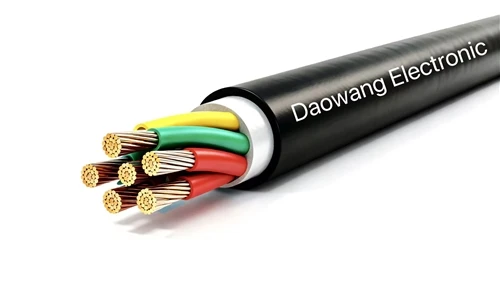
When we talk about the performance of a car, we often focus on engine power, intelligent driving systems or interior quality, but rarely pay attention to those hidden inside the car body, like "neural networks" - the car wires. They connect every electrical component of the vehicle, from lights, sensors to power systems, silently supporting the normal operation of the entire vehicle. And behind these car lines, the SAE standard is like a strict "quality manager", defining its performance boundaries and safety limits. Today, let's uncover the mystery of the SAE standard car wires.
What is the SAE standard?
First of all, it should be evident that the SAE standard is an acronym for "Society of Automotive Engineers" rather than a particular automaker or brand. SAE has developed standards encompassing the whole automotive value chain, including design, manufacturing, and testing, and is a highly authoritative standardization organization in the global automotive industry.Among these, the standards related to automotive lines have become the common "entry threshold" in the industry.
The reason why automotive wiring must follow the SAE standards is fundamentally due to the complexity of the vehicle's electrical system and the harsh working environment. Automotive wiring made by various manufacturers may perform inconsistently in the absence of a single standard specification, ranging from minor electrical failures to major incidents like short circuits and fires. As a result, the SAE standards serve as a "benchmark" that guarantees the dependability of automotive wiring in a variety of harsh circumstances.

Insulating materials: Three types of materials are suitable for different scenarios
The insulation layer is the most important "first line of defense" for automotive wires. It protects the internal conductive core from different types of damage that can happen in the vehicle's complicated operating environment, such as mechanical abrasion, chemical corrosion from oil and coolant, extreme temperature changes, moisture intrusion, and electrical interference. The SAE (Society of Automotive Engineers) standard is a well-known standard for automotive engineering specifications around the world. It has set clear, strict definitions for three main types of insulation materials that are used in automotive wire applications. Each type is made with different materials and performance characteristics, and they are carefully adjusted to fit the specific environmental stresses and operational needs of different areas of a vehicle. This ensures that the wires will work reliably and last a long time in a variety of situations:

1
Thermoplastic insulation
Represented by materials such as PVC, it includes three types: GPT (general-purpose), TWP (thin-walled), and HDT (heavy-duty). Among them, the TWP type, due to its thin-walled design, can effectively save space and is widely used in body wiring harnesses. The HDT type provides enhanced mechanical protection with a thicker insulation layer and is suitable for complex working conditions.
2
Cross-linked polyolefin insulation
Polyolefin materials that have undergone cross-linking treatment (such as GXL, TXL, and SXL types) have significantly enhanced heat resistance and are the preferred choice for high-temperature environments like engine compartings.
3
Insulation of thermosetting elastomers
HTS type cables, crafted from high-performance synthetic rubber as the core insulation and sheathing material, boast outstanding mechanical properties that combine superior flexibility with exceptional wear and tear resistance, along with impressive durability against long-term use. This unique material composition allows the cable to maintain its structural integrity and electrical performance even after repeated bending, twisting and movement, without cracking, hardening or losing its insulating properties. What makes HTS cables stand out is their tailored design for dynamic wiring environments in automotive applications, making them an ideal and reliable choice for wiring scenarios that demand frequent flexing and positional changes-most notably in vehicle door modules, where wiring harnesses are constantly subjected to repeated bending motions every time the door is opened and closed, a common yet critical automotive wiring application that places stringent demands on cable flexibility and long-term durability.
How to select the right SAE automotive wiring for different scenarios?
Engine nacelle
As one of the hottest and most temperature-vulnerable areas of the vehicle, the engine compartment demands high-performance wiring solutions with excellent heat resistance. For this core area, GXL or TXL cross-linked polyolefin cables should be given absolute priority. Their cross-linked structure endows superior thermal stability and wear resistance, perfectly adapting to the harsh high-temperature environment and ensuring reliable electrical connection and long-term operational safety of vehicle components.
Body wiring harness
Considering both compactness and versatility, TWP thin-walled thermoplastic cables stand out as the ideal selection for diverse wiring scenarios. Its thin-walled structural design greatly saves installation space, fitting perfectly in narrow and confined equipment cavities. Meanwhile, the thermoplastic material endows it with excellent adaptability, applicable to multiple industrial and electronic fields, easily meeting different wiring requirements with reliable performance and stable operation.
Door/sunroof module
In scenarios where electrical equipment and systems undergo frequent switching operations, the connected cables are subjected to repeated bending, twisting and mechanical stress on a regular basis, which places stringent demands on their structural durability and operational flexibility. Only cables with excellent flexural performance can withstand such continuous mechanical wear without compromising electrical conductivity or structural integrity. Therefore, HTS cables have been chosen as the preferred option.
Starting system
When it comes to the critical scenario of high-current transmission in industrial, automotive and marine power systems, the selection of wiring solutions demands strict compliance with professional industry standards. Specifically, heavy-duty battery cables engineered and manufactured in full accordance with the SAE J1127 standard are the indispensable choice.The strict stipulations of this standard ensure that power can be transmitted reliably, safely and stably even under continuous high current loads.
Future Trend
The need for cables in automotive electrical systems is continuously growing due to the quick development of new energy vehicles. The SAE standards may change in the future to include more stringent electromagnetic compatibility requirements, higher temperatures, and the use of eco-friendly materials. The secret to increasing product competitiveness for automakers and component suppliers will be to keep a close eye on standard trends and make technical preparations ahead of time.
The best example of the "details determine safety" concept in the automotive industry is the existence of SAE automotive wiring, which has evolved from a single thin wire to a comprehensive set of standards. The next time we marvel at the sophisticated technology found in cars, let's keep in mind these "life lines" that are concealed inside the body of the vehicle; it is their dependable operation that offers a strong guarantee for every trip.