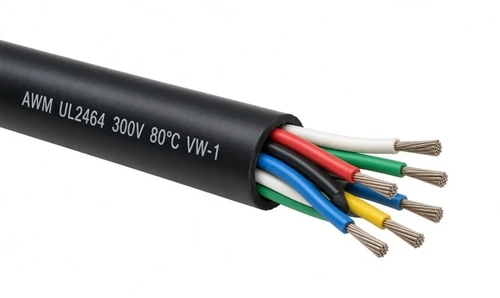
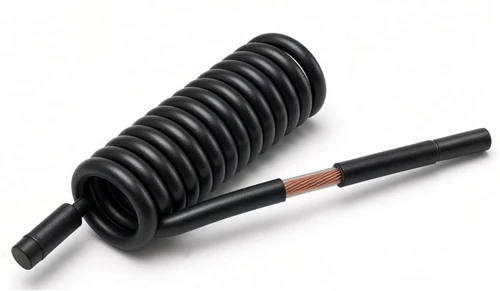
When we talk about the German automotive industry, the first things that come to mind are the driving performance of BMW, the luxury of Mercedes-Benz, and the durability of Volkswagen. However, few people pay attention to the "backstage heroes" that support these qualities - the automotive wires. If the engine is the "heart" of a car, then the automotive wires are the "vessels" and "nerves" all over the body. And German standard automotive lines (German standard lines) have, with an almost "obsessive" technical logic, become the "hard currency" that global automakers are competing to adopt. Today, let's uncover its quality secrets.
1.Beyond "Meeting Standards" : How does the German Standard define "Beyond Curriculum" qualities?
In the field of industrial manufacturing, "standards" are usually the bottom line. However, the logic of the German Standard Automotive Line is to turn the standards into "ceilings". This difference in concepts can be clearly demonstrated by its stipulations on core indicators.

Take the conductor material as an example. The international standard requires the purity of copper used in automotive wiring to be 99.9%, while the German standard directly raises it to 99.95% of high-purity electrolytic copper. Don't underestimate this 0.05% increase. It can increase the conductivity of the wire by 3% and reduce the resistance by 5%. Not only does this reduce energy loss, but it also lowers the risk of fire caused by overheating. More importantly, the German standard also requires the conductors to use a "bundling + double twisting" double-layer twisting process. This process can increase the flexibility of the wire by 40%. In parts of the vehicle chassis that are subject to frequent vibrations, the service life is extended by more than twice compared to ordinary wires.
The design of the insulation layer further demonstrates the "refined thinking" of the German standard. According to the environmental differences in various parts of the car, the German standard has subdivided 12 types of insulation material formulas: the silicone rubber insulation layer for the engine compartment, which can withstand the instantaneous high temperature during engine startup; the PVC material for the door area, which does not crack even after 100,000 times of door opening and closing bending tests; the flame-retardant cross-linked polyethylene material near the fuel tank, which can extinguish itself within 3 seconds when exposed to fire. This "one formula for one part" customized standard far exceeds the requirements of many countries' "general-purpose" standards.
2.From Laboratory to Road: The "Extreme Test" of German Standard Car Wires

The meticulousness of German engineers is vividly demonstrated in the testing process of the automotive line. They believe that "a qualified automotive line must be capable of withstanding all extreme scenarios throughout the entire life cycle of a car." For this reason, Debiao has established a dual testing system covering "extreme environments + extreme working conditions", and many test items are even referred to by the industry as "abnormal level assessment".
In the environmental test chamber, the automotive wires are subject to a cyclic impact of "-40℃ extreme cold →80℃ high temperature →95% high humidity", with 10 cycles per day for 30 consecutive days. The insulation layer must not show any cracking or bulging. In mechanical fatigue testing, the wires are fixed on a test bench that simulates the vibration of the chassis and are vibrated at a frequency of 300 times per minute. After 500 hours of continuous testing, the breakage rate of the conductors must not exceed 0.1%. The more stringent test is the "chemical corrosion test". The test fluid directly uses a mixture of commonly used engine oil, brake fluid and antifreeze in automobiles. After the wires are immersed in it for 1,000 hours, the decrease in insulation resistance must not exceed 10%.
In response to the rise of new energy vehicles, the German standard has specially added a "high-voltage pulse test". For high-voltage wiring harnesses, they must withstand 10 10kV high-voltage pulse impacts within one minute, and the insulation layer must not be punctured. This testing standard directly addresses the high-voltage safety pain points of new energy vehicles and has also made German standard high-voltage wiring harnesses an important choice for new energy vehicle manufacturers such as Tesla and BYD.
3.The "choice logic" of Global automakers: Why Must German Standards be used?
Nowadays
Not only do domestic German car brands such as Volkswagen, BMW and Mercedes-Benz offer the German label cars as standard equipment, but also car manufacturers worldwide like Toyota, Ford and Hyundai have adopted German label products on their high-end models. Behind this is the car manufacturers' precise consideration of "full life cycle cost".

Data display
The model using German standard automotive wires has a failure rate of the electrical system that is over 60% lower than that of the models using ordinary wires. In the automotive industry, the average cost for post-sales repair of a single electrical system failure is 2,000 yuan, and on average, electrical system failures occur 3 to 5 times during the life cycle of a vehicle. For a car manufacturer with an annual sales volume of 1 million units, by using German standard automotive wires, it can save up to several hundred million yuan in post-sales costs annually.

Above all
The "compatibility" of German standards has provided convenience for automakers. The interface specifications and color markings of German standard automotive wires (such as uniform orange for high-voltage wires and black for grounding wires) have all become common industry standards. This means that German standard wires produced by different suppliers can be replaced at will, and car manufacturers do not need to invest additional R&D costs to adapt products from different suppliers. This combination of "standardization + compatibility" has made the German standard automotive line the "universal language" in the global automotive supply chain.

4.The future is Here: How can German Standards Adapt to the New Demands of Smart Vehicles?
With the development of intelligent driving and vehicle networking technologies, the role of automotive lines is evolving from "signal transmitters" to "data transmission hubs". To meet the demand for tens of gigabytes of vehicle data transmission per second, German standards have taken the lead in launching the research and development of a new generation of automotive line standards.
Currently, DIN (German Institute for Standardization) has released a draft of the DIN/TS 70113 standard, which proposes a "wiring + fiber optic" composite structure solution for the high-speed data transmission requirements of intelligent vehicles. This composite wiring can not only transmit traditional power signals but also achieve high-speed data transmission for vehicle Ethernet through the built-in fiber optic, with a transmission rate of up to 10 Gbps, meeting the sensor data transmission requirements of L4-level intelligent driving. At the same time, the new standard also adds the requirement of "electromagnetic shielding", through a double-layer aluminum foil + woven net shielding structure, the attenuation rate of electromagnetic interference is increased to 99.9%, avoiding data transmission being interfered by equipment such as engines and radars.
From traditional fuel vehicles to new energy vehicles, from ordinary driving to intelligent driving, the German brand automotive line has always been leading the technological direction of the industry. Its success lies not only in the ultimate pursuit of quality, but also in the accurate prediction of industry trends. Perhaps this is the true core competitiveness of "German Manufacturing" - not adhering to standards rigidly, but constantly defining new standards.