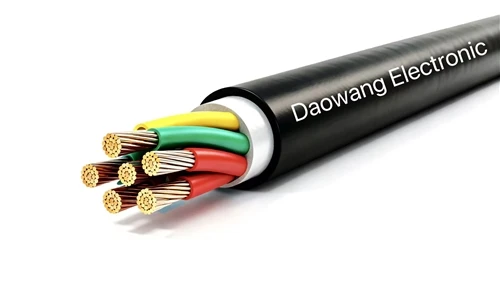
When we talk about Japanese cars, labels such as fuel efficiency, reliability and high space utilization always come to mind. But few people have noticed that the "unsung hero" behind these advantages is the Nippon Standard Automotive Wire. As the "nerve center" of the automotive electrical system, it is like fine blood vessels, connecting all electrical components such as the engine, instrument panel, and headlights. Today, let's lift the veil on the mystery of the Japanese standard car line and see what makes it an important cornerstone of the quality of Japanese cars.
1.What is the Japanese standard automotive wiring?
The "Japanese Automobile Wire" is, as the name suggests, an automotive production line that follows the technical specifications set by the Japan Automobile Standards Organization (JASO). The core reference standards include JASO D608, D609, D611, etc. At the same time, it must also comply with the supporting specifications issued by the Japan Industrial Standards Committee (JISC), such as JIS C 3406-1993. These standards were not casually formulated; rather, they are the result of continuous optimization in the century-long development of the Japanese automotive industry based on local climate, vehicle characteristics, and user needs.
Compared with the Chinese standard, German standard and American standard, the most distinctive feature of the Japanese standard system is "precise adaptation". In Japan, the summer temperature is high and the humidity is high, while the urban roads are narrow. This requires the automotive wiring to not only withstand extreme environments but also meet the wiring requirements of compact vehicles. From raw material selection, production processes to quality inspection, the Japanese standard has established a complete process specification. For example, it clearly requires that the cable labels clearly indicate the manufacturer, specifications and models, ensuring the convenience of installation and maintenance. This rigorous standard system is precisely the core strength of the reliability of Japanese automotive wiring.
2.Four core advantages: Understanding the "superiorities" of the target car lineup
If the standard is the framework, then the unique technical advantages are the flesh and blood of the Target Automotive Wire. By comparing the standard cables from different regions, its advantages are concentrated in four aspects, each precisely matching the core requirements of the automotive usage scenarios.
Japanese cars mainly feature compact models, with numerous electrical components inside and extremely limited wiring space. Nissan automobiles have specifically optimized the conductor twisting process and insulation layer materials to achieve greater flexibility than many similar products. For instance, common models such as AVSS and AVS use multi-strand copper wires and thin-walled insulation designs, enabling flexible wiring even under very small bending radii. This not only avoids the risk of damage during installation but also frees up more space for interior optimization. This advantage is particularly evident in complex wiring areas such as dashboards and doors, making it a "savior in narrow spaces".
In Japan, the temperature often exceeds 35℃ in summer, and after vehicles are exposed to the sun, the cabin temperature can reach over 80℃. This poses strict requirements for the heat resistance of automotive wires. JTS automotive wires maintain a stable operating temperature range of -40℃ to 125℃. Some high-end models, such as the AEX series, use cross-linked polyethylene insulation materials, with a heat resistance level of up to 120℃. Whether in the harsh winter in the north or the hot summer in the south, it can maintain stable electrical performance and will not experience problems such as insulation layer aging or cracking due to drastic temperature changes. This extremely strong environmental adaptability is an important guarantee for the reliability of Japanese cars.
Today, with fuel economy receiving increasing attention, lightweighting has become an important development direction in the automotive industry. And Toyota has already made early preparations in this regard. It uses special thermoplastic elastomers (TPE) and other lightweight insulation materials to significantly reduce the weight of the cables while ensuring performance. At the same time, the thin-walled insulation design not only reduces material consumption but also narrows the outer diameter of the cables. Taking a 0.5mm² cable as an example, the insulation thickness of Toyota's product is only 0.3-0.4mm, which is 15%-20% lighter than traditional cables. Accumulated over hundreds of meters of cables in the entire vehicle, this can reduce the vehicle's weight by several kilograms, indirectly improving fuel efficiency.
Japan's strict environmental regulations permeate every aspect of industrial production, and the Nissan automotive Wire is no exception. From the very beginning, harmful substances such as lead and halogens are completely avoided. Insulation materials mostly use recyclable polyvinyl chloride or cross-linked polyethylene. During the production process, the Japanese lean production philosophy is followed, and the process is optimized to reduce material waste. This complete chain of environmental protection design not only conforms to the global trend of green manufacturing, but also makes the Nissan automotive Wire highly favored in markets such as Europe and the United States, where environmental protection requirements are strict.
3.Common Models and Applications: The "Practical Map" of Japanese Standard Automotive Wires
The Japanese standard automotive line is not a single product but a complete product line covering multiple series, with different models corresponding to different application scenarios. The most representative ones include the AVS, AVSS, AEX and other series, which together form the "neural network" of the automotive electrical system:
Adopting standard insulation thickness, it is suitable for conventional low-voltage circuits such as interior lighting and audio systems. It is a basic configuration for Japanese passenger cars and has become one of the most widely used models due to its balanced performance and cost-effectiveness.
A typical representative of thin-walled insulation design, it stands out for its flexibility and lightweight advantages. It is mainly used in areas with limited wiring space such as instrument panels and door control, and is commonly found in compact cars and small SUVs.
High-end heat-resistant model. The cross-linked polyethylene insulation material enables it to withstand temperatures up to 120℃. It is mainly used in high-temperature environments such as engine compartments and is suitable for high-performance engine models like turbocharged engines.

4.Conclusion: The Inspiration from the Japanese Standard Automotive Line - Details determine quality
What seems like an ordinary car line actually contains profound wisdom in industrial design. The success of Toyota's car lines lies fundamentally in their precise understanding of user needs and their ultimate pursuit of technical standards - optimizing flexibility for compact vehicles, enhancing heat resistance for high-temperature environments, reducing weight for fuel efficiency requirements, and upgrading materials for environmental trends.
Nowadays, with the development of new energy vehicles, Toyota's car lines are also upgrading towards higher pressure and lightweighting, integrating deeply with intelligent manufacturing and artificial intelligence technologies. This continuous evolving ability might be the key to its long-term presence in the global market. Next time when we talk about the quality of Japanese cars, why not think about this "nerve center" hidden deep within the car body? It is precisely the refinement of these details that has created a reliable reputation.