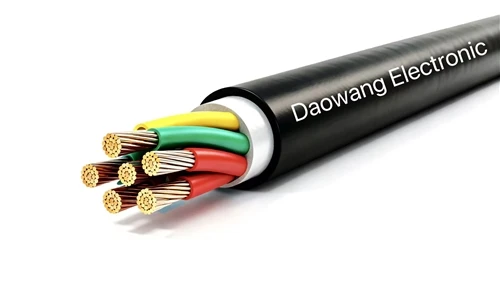
In fields such as automotive electronics and industrial control, AVS and AVSS wires are commonly used insulated conductors, but many engineers often confuse the technical characteristics of the two. This article will break down the core differences between these two types of wires from material, performance to application scenarios, and help you make an accurate selection by combining real cases.
1.Structural difference
Both belong to PVC insulated wires, but there are obvious differences in the design of the insulation layer, which is the root cause of the performance disparity.
AVS wire
The conductors are mostly twisted soft copper wires, with wire diameters ranging from 0.3 to 2.0mm², conforming to the JIS C 3306 standard.
AVSS wire
The inner layer of soft PVC ensures flexibility, while the outer layer of hard PVC enhances protection. The conductor specifications are basically the same as those of AVS.

2.Application scenarios and typical cases
①AVS wire: The cost-effective choice for normal temperature and low voltage scenarios
Automotive interior wiring harness case: In the dashboard wiring harness project of a compact car of a certain joint venture brand, for low-voltage equipment such as the in-car audio system (power 45W, working current 3.75A) and ambient lighting (single channel power 10W, current 0.83A), 0.75mm² AVS wires were selected as the connection wiring harnesses. According to the copper wire current-carrying capacity standard, the safe current-carrying capacity of 0.75mm² copper wire is 6-9A, and the actual current of the equipment is only 41%-62% of the current-carrying capacity, which meets the requirements of long-term operation safety redundancy. This scene is located inside the cockpit, with the ambient temperature stabilized at -10℃ to 60℃, free from oil contamination, and has relatively high requirements for cost control. The final wiring harness passed the 1000-hour vibration test at 10-50Hz without any faults. The insulation resistance of the insulation layer remained above 1000MΩ, and there was no aging phenomenon. Compared with using AVSS wires, the material cost was reduced by 15%.
②AVSS wire: A reliable guarantee for high-temperature and high-oil environments
Automotive engine compartment case: For the fuel sensor connection wire harness in the engine compartment of a certain commercial vehicle, 1.0mm² AVSS wire was selected. This area is constantly exposed to a high-temperature environment of 80℃ to 100℃. During idling, the local temperature can reach 105℃, and there is a risk of engine oil leakage (mineral oil content ≤5mg/cm²). The current-carrying capacity of the 1.0mm² copper wire in a 105℃ environment is 7.2A, and the working current of the sensor is 4.5A, which is only 62.5% of the current-carrying capacity, meeting the selection specifications for high-temperature environments. After continuous operation at 105℃ for 3,000 hours, the insulation layer thickness of the AVSS wire decreased from 0.35mm to 0.33mm, with a attenuation rate of only 5.7%. In contrast, the insulation layer thickness of the same type of AVS wire decreased by 0.1mm under the same conditions, with a attenuation rate of 28.6%. In addition, its outer layer of hard PVC has undergone 5,000 friction tests (at a pressure of 5N), with a wear of only 0.01mm, thus avoiding insulation damage caused by friction between the wiring harness and engine components.
③Negative case: The cost of incorrect selection
In order to cut costs, a certain auto repair shop replaced the wiring harness near the car transmission (with a long-term temperature of 90℃ to 100℃, which poses a high risk of hydraulic oil leakage) with 1.0mm² AVS wires instead of AVSS wires. The current-carrying capacity of a 1.0mm² AVS wire at 100℃ is only 5.4A, while the working current of the transmission sensor is 4.8A, which has reached 88.9% of the current-carrying capacity and is close to the critical value for full-load operation. After being used for 3 months (approximately 500 hours), due to the insulation aging rate accelerating by 50% for every 10℃ increase in temperature, the insulation layer of the AVS wire showed significant softening (the hardness dropped from 85Shore D to 60Shore D), cracking, and the insulation resistance decreased from the initial 1000MΩ to below 20MΩ. This caused the transmission sensor signal to be interrupted, resulting in a gear shifting jerky fault in the vehicle (fault code P0700). After replacing with compliant AVSS wires, the fault was completely resolved. The cost of replacing parts, 8,000 yuan, labor costs, 2,000 yuan and vehicle downtime losses, totaling over 20,000 yuan, was caused by the incorrect selection of this model.

3.Practical Guide for Selection
Taking into account the three major factors of temperature, oil contamination and cost comprehensively: AVSS is preferred in high-temperature and high-oil environments (such as engine compartments and hydraulic equipment), while AVS is suitable for normal temperature and dry scenarios (such as automotive interiors and household electronics).
At the same time, please note:
Select the wire diameter based on the load current. For equipment that operates for a long time, choose 60% of the current-carrying capacity; for equipment that operates for a short time, choose 60% to 100%.
Automobile wiring harnesses should be selected in accordance with color code specifications to facilitate identification during later maintenance.
The matching between the current-carrying capacity of the conductor and the line load is verified through the smoke emission curve and simulation tools to ensure the safety and reliability of the selection.