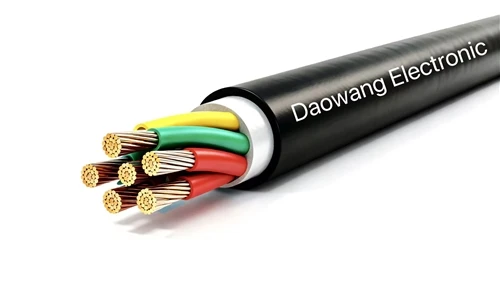
If you have an interest in automotive wiring, industrial cabling, or electronics DIY, today we're going to talk about a low-profile yet incredibly practical type of wire: FLR9Y-A. While it may not be as ubiquitous as standard household power cords, in the realms of automotive manufacturing and high-end equipment, it is a highly trusted "unsung hero."
What is FLR9Y-A wire
FLR9Y-A is a thin-walled, single-core automotive cable featuring polypropylene (PP) insulation, belonging to the German Standard (German Spec) product series. It is primarily utilized in automotive wiring harness systems, with a particular emphasis on halogen-free composition and high-temperature resistance.
FLR
Denotes a thin-wall, reduced-insulation design, allowing the cable to be lighter and thinner-ideal for the space-constrained environments of modern automobiles.
9Y
Indicates that the insulation material is Polypropylene, a material distinguished by its exceptional heat resistance.
A
Signifies that the conductor utilizes a symmetric stranded structure, offering excellent flexibility and meeting the requirements of the ISO 6722 Class C standard.

Compared to traditional PVC-insulated wires, the FLR9Y-A is more environmentally friendly and durable. It features an operating temperature range typically spanning from -40°C to +125°C (capable of continuous operation for 3,000 hours) and a voltage rating of 60V DC / 25V AC, making it ideally suited for demanding environments-such as those found in automobiles-characterized by high vibration and extreme temperature fluctuations.
Just imagine: whether the engine bay is scorching hot like a steamer in the summer, or temperatures plummet to tens of degrees below zero in the northern winter, this wire reliably transmits signals and power without easily succumbing to aging or short circuits. That is precisely why it is so widely popular!
Core Advantage: Why Does Everyone Love Using FLR9Y-A?
① Eco-friendly and Halogen-free: It does not release toxic halogen gases during combustion, thereby meeting the stringent requirements of modern automobiles regarding environmental protection and passenger safety. In the event of an accident, it helps mitigate the risks associated with smoke and toxicity.
② Thin-walled and Lightweight: The insulation layer is relatively thin (typically around 0.25–0.30 mm), resulting in a small overall diameter and reduced weight. This feature is particularly beneficial for electric vehicles (EVs) and new energy models, as it helps lower the vehicle's total weight and extends its driving range.
③ Excellent Heat Resistance and Flame Retardancy: The polypropylene insulation enables the cable to withstand high temperatures of up to 125°C, while its flame-retardant properties comply with relevant international standards. In high-temperature zones-such as those surrounding the engine or near the exhaust system-its performance significantly surpasses that of ordinary wires.
④ Flexibility and Vibration Resistance: The conductors typically utilize high-purity bare copper or tinned copper; combined with an optimized stranded structure, the cable features a small bending radius and strong fatigue resistance. Even amidst the daily bumps and vibrations inherent to automotive operation, it maintains excellent electrical contact over the long term.
⑤ Stable Electrical Performance: Conductors across various cross-sectional areas exhibit low electrical resistance (e.g., the 0.5 mm² specification has a resistance of approximately 37.1 mΩ/m), ensuring high transmission efficiency and minimal signal loss.
All in all, the FLR9Y-A is like a reliable, eco-friendly, and unassuming friend-silently safeguarding circuit safety even in the most demanding environments.
Overview of Common Specifications and Technical Parameters
FLR9Y-A Wire is available in a variety of cross-sectional areas to meet diverse current requirements. The following are some common specifications from our factory:

Available in a wide range of colors (red, black, blue, yellow, green, white, etc.), facilitating the distinction between positive and negative terminals or different signals during wiring.

Real-World Applications: From Automotive to Industry
The primary application of FLR9Y-A is in automotive settings. It is widely used in:
-
Connections within high-temperature zones of the engine compartment
-
Signal transmission for the Body Control Module (BCM) and ECU sensors
-
Lighting systems, including daytime running lights, taillights, and instrument panels
-
Comfort features such as power seats, power windows, and air conditioning

FLR9Y-A is also suitable to be used for motorcycles, electric vehicles, agricultural machines, construction vehicles and even some industrial control cabinets and robotic wiring systems. It can be used for any application requiring a single core wire that is heat resistant, halogen free and light weight.
In the era of new energy vehicles, the demand for this kind of thin-wall heat-resistant wire is increasing steadily driven by Battery Management Systems (BMS) and hybrid high/low-voltage architectures. It provides engineers with the ability to create more efficient and safer electrical layouts in tight spaces.
Comparison with Other Automotive Wires
Many people ask: What is the difference between FLR9Y-A, FLRY, and FLR2X?
①FLRY Series: Primarily features PVC insulation with a typical temperature rating of 85–105°C. While offering lower costs, its performance may be inferior to that of PP materials in high-temperature environments.
②FLR9Y-A: Features PP insulation with a temperature rating of 125°C; it is halogen-free and more environmentally friendly, making it suitable for applications with more demanding requirements.
③XLPE Insulation (e.g., certain FLR2X variants): Capable of withstanding even higher temperatures, though its material characteristics and cost profile differ.
When making a selection, consider the specific operating environment: if the temperature consistently approaches or exceeds 120°C, prioritize the FLR9Y-A; however, if the budget is limited and temperatures are not high, the FLRY may be a more economical choice.
How to Properly Select and Install the FLR9Y-A?
(1)Purchasing Tips:
①Look for ISO 6722 Class C certification and reputable manufacturers to avoid inferior products.
②Verify that the conductor is made of high-purity copper and that the insulation layer is uniform and free of bubbles.
③For bulk purchases, it is recommended to request a RoHS report to ensure environmental compliance.
(2)Installation Precautions:
①When routing cables, avoid friction against sharp edges; use corrugated tubing or protective sleeving for protection.
②Ensure secure fastening to prevent abrasion caused by vibration.
③In high-temperature zones, ensure adequate clearance is maintained for heat dissipation.
④When soldering or crimping terminals, exercise care regarding temperature control to avoid damaging the insulation layer.
As part of routine maintenance, periodically inspect the wiring harness for signs of aging or cracking-particularly in high-temperature or oil-contaminated environments.
Conclusion: Small Wires, Big Safety
FLR9Y-A wire may look like a small part in an automotive electrical system but it has an important job to do and that is to guarantee safety, reliability and environmental friendliness. In today's world, where intelligent mobility and sustainable development are the order of the day, such specialized wires are becoming increasingly indispensible.
So next time you see a new energy vehicle running smoothly, or you install aftermarket devices in your car, please think of FLR9Y-A wires hidden behind their protective plastic sheathing, quietly transmitting power and signals, making our lives more convenient and secure.