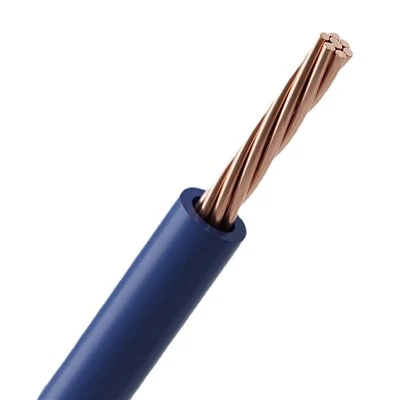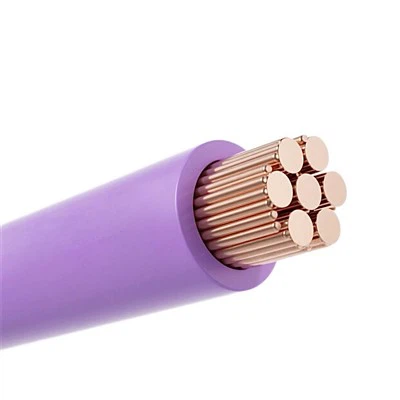

As a supplier of FLRY - A Wire, I'm often asked about the frequency response of this remarkable product. In this blog post, I'll delve into the details of the frequency response of FLRY - A Wire, exploring its characteristics, importance, and how it compares to other similar wires in the market.
Understanding Frequency Response
Before we jump into the specifics of FLRY - A Wire's frequency response, let's first understand what frequency response means. Frequency response is a measure of how a system or component responds to different frequencies of an input signal. In the context of wires, it refers to how well the wire can transmit electrical signals at various frequencies.
A good frequency response is crucial for ensuring that the electrical signals transmitted through the wire are accurate and reliable. If a wire has a poor frequency response, it can lead to signal distortion, attenuation, and other issues that can affect the performance of the electrical system.
Frequency Response of FLRY - A Wire
The FLRY - A German Standard Automotive Wire is designed to have an excellent frequency response over a wide range of frequencies. This wire is specifically engineered to meet the demanding requirements of automotive applications, where high - speed data transmission and reliable electrical connections are essential.


At low frequencies, FLRY - A Wire exhibits low resistance and capacitance, which allows for efficient transmission of direct current (DC) and low - frequency alternating current (AC) signals. This is important for powering various components in a vehicle, such as lights, motors, and sensors.
As the frequency increases, FLRY - A Wire maintains its performance due to its high - quality insulation and conductor materials. The insulation material used in FLRY - A Wire has a low dielectric constant, which helps to reduce signal loss and crosstalk. Crosstalk is the interference between adjacent wires, and minimizing it is crucial for maintaining the integrity of the transmitted signals.
In the high - frequency range, FLRY - A Wire can effectively transmit signals up to several megahertz. This makes it suitable for applications such as automotive communication systems, where high - speed data transfer is required for functions like in - vehicle networking, GPS, and Bluetooth connectivity.
Comparison with Other Wires
When compared to other similar wires in the market, FLRY - A Wire stands out due to its superior frequency response. For example, the FLRX - A German standard automotive wire is another popular option, but it may not offer the same level of performance at high frequencies as FLRY - A Wire. The insulation and conductor design of FLRY - A Wire are optimized to provide better signal integrity and less attenuation at higher frequencies.
Similarly, the German FLX - B Car Wire has its own set of characteristics, but it may not be as well - suited for high - speed data transmission applications as FLRY - A Wire. FLRY - A Wire's ability to maintain a stable frequency response across a wide range of frequencies gives it an edge in modern automotive systems that rely on complex electrical and electronic components.
Importance of Frequency Response in Automotive Applications
In the automotive industry, the frequency response of wires is of utmost importance. With the increasing adoption of advanced driver - assistance systems (ADAS), autonomous driving technologies, and in - vehicle infotainment systems, the demand for high - speed data transmission and reliable electrical connections has grown significantly.
For ADAS functions such as collision avoidance, lane departure warning, and adaptive cruise control, accurate and timely data transmission is critical. A wire with a poor frequency response can lead to delays or errors in the data received by the sensors and control units, which can compromise the safety and performance of these systems.
In - vehicle infotainment systems also rely on high - speed data transfer for features like streaming media, navigation, and smartphone integration. FLRY - A Wire's excellent frequency response ensures that these systems can operate smoothly without any glitches or interruptions.
Factors Affecting Frequency Response
Several factors can affect the frequency response of FLRY - A Wire. One of the main factors is the conductor material. FLRY - A Wire typically uses high - purity copper or copper - alloy conductors, which have low resistivity and good conductivity. This helps to minimize signal loss and maintain the integrity of the transmitted signals.
The insulation material is another crucial factor. As mentioned earlier, the insulation used in FLRY - A Wire has a low dielectric constant, which reduces signal loss and crosstalk. The thickness and quality of the insulation also play a role in determining the frequency response. A thicker and more uniform insulation layer can provide better protection against external interference and improve the overall performance of the wire.
The physical structure of the wire, such as its diameter and the number of strands, can also impact the frequency response. A larger diameter wire generally has lower resistance, which is beneficial for low - frequency signals. However, for high - frequency applications, a multi - stranded wire may be more suitable as it can reduce skin effect. The skin effect causes the current to flow mainly on the outer surface of the conductor at high frequencies, and a multi - stranded wire can mitigate this effect.
Testing and Certification
To ensure the quality and performance of FLRY - A Wire, it undergoes rigorous testing and certification processes. These tests are designed to evaluate the wire's frequency response, as well as other important parameters such as resistance, capacitance, and insulation resistance.
The wire is tested in a controlled environment using specialized equipment to measure its performance at different frequencies. The results of these tests are compared against industry standards and specifications to ensure that the wire meets the required quality and performance criteria.
Once the wire passes all the tests, it is certified for use in automotive applications. This certification provides assurance to our customers that the FLRY - A Wire they are purchasing is of high quality and will perform as expected in their automotive systems.
Conclusion
In conclusion, the frequency response of FLRY - A Wire is one of its key strengths. Its ability to transmit electrical signals accurately and reliably across a wide range of frequencies makes it an ideal choice for modern automotive applications. Whether it's for powering basic components or enabling high - speed data transmission in advanced automotive systems, FLRY - A Wire delivers excellent performance.
If you are in the market for high - quality automotive wires with superior frequency response, we invite you to explore our FLRY - A German Standard Automotive Wire. We are committed to providing our customers with the best products and services, and we are ready to discuss your specific requirements and help you find the right solutions for your automotive applications. Contact us today to start the procurement negotiation process and take advantage of the benefits that FLRY - A Wire has to offer.
References
- Automotive Electrical Wiring Handbook, McGraw - Hill
- IEEE Standards for Electrical and Electronic Components in Automotive Applications
- International Electrotechnical Commission (IEC) Standards for Wires and Cables