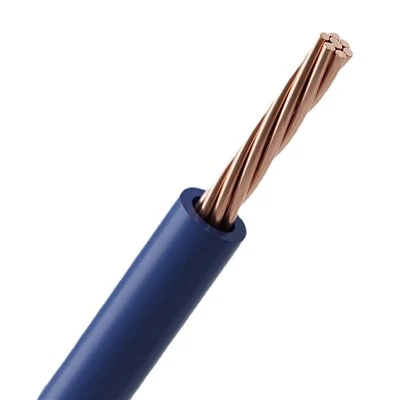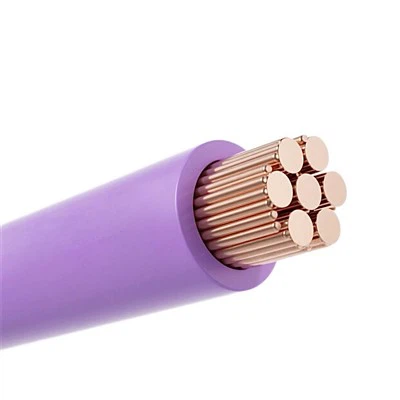

As a supplier of AVSS Wire, I often receive inquiries from customers about various technical aspects of this product. One question that frequently comes up is, "What is the phase velocity of AVSS Wire?" In this blog post, I'll delve into the concept of phase velocity, explain how it applies to AVSS Wire, and provide some insights into its significance in automotive wiring applications.
Understanding Phase Velocity
Before we discuss the phase velocity of AVSS Wire, let's first understand what phase velocity is. In the context of electromagnetic waves, phase velocity refers to the speed at which a point of constant phase (such as a crest or a trough) of a wave propagates through a medium. It is denoted by the symbol (v_p) and is calculated using the formula (v_p=\frac{\omega}{k}), where (\omega) is the angular frequency of the wave and (k) is the wave number.
In a transmission line like AVSS Wire, electromagnetic waves are used to transmit electrical signals. The phase velocity of these waves determines how quickly the signal can travel along the wire. It is an important parameter because it affects the timing and synchronization of signals in a circuit.
Phase Velocity of AVSS Wire
AVSS Wire is a type of automotive wire commonly used in Japanese cars. It is known for its thin insulation and high flexibility, making it suitable for use in tight spaces within the vehicle. The phase velocity of AVSS Wire depends on several factors, including the dielectric constant of the insulation material, the geometry of the wire, and the frequency of the signal being transmitted.
The dielectric constant ((\epsilon_r)) of the insulation material plays a crucial role in determining the phase velocity. The phase velocity of an electromagnetic wave in a dielectric medium is given by (v_p=\frac{c}{\sqrt{\epsilon_r}}), where (c) is the speed of light in a vacuum ((c = 3\times10^8\ m/s)). For AVSS Wire, the insulation material typically has a relatively low dielectric constant, which allows for a relatively high phase velocity compared to other types of wires.
The geometry of the wire also affects the phase velocity. In general, a thinner wire with a smaller cross - sectional area will have a higher phase velocity than a thicker wire. This is because the electric and magnetic fields associated with the signal are more concentrated in a thinner wire, resulting in a faster propagation of the wave.
The frequency of the signal being transmitted is another important factor. At higher frequencies, the phase velocity of AVSS Wire may decrease due to the effects of dispersion. Dispersion occurs when the different frequency components of a signal travel at different speeds, causing the signal to spread out over time.
Significance in Automotive Wiring Applications
The phase velocity of AVSS Wire is significant in automotive wiring applications for several reasons. Firstly, it affects the signal integrity of the electrical systems in the vehicle. A higher phase velocity means that the signal can travel more quickly along the wire, reducing the time delay between the source and the destination. This is particularly important in high - speed communication systems, such as those used in modern automotive electronics, where timing is critical.
Secondly, the phase velocity can impact the electromagnetic compatibility (EMC) of the vehicle. If the phase velocities of different wires in a bundle are not matched, it can lead to signal interference and electromagnetic radiation. By carefully selecting wires with appropriate phase velocities, automotive engineers can minimize these EMC issues and ensure the reliable operation of the electrical systems.
Comparison with Other Automotive Wires
To better understand the phase velocity of AVSS Wire, it's useful to compare it with other types of automotive wires. For example, AEX Wire and AVS Wire are also commonly used in Japanese cars.


AEX Wire has a thicker insulation compared to AVSS Wire, which generally results in a lower phase velocity. The thicker insulation increases the dielectric constant of the wire, slowing down the propagation of the electromagnetic wave. On the other hand, AVS Wire has a similar insulation thickness to AVSS Wire, but its phase velocity may still differ due to differences in the dielectric properties of the insulation material.
Measuring the Phase Velocity of AVSS Wire
Measuring the phase velocity of AVSS Wire can be a challenging task. One common method is to use a time - domain reflectometer (TDR). A TDR sends a short electrical pulse along the wire and measures the time it takes for the pulse to reflect back from the end of the wire. By knowing the length of the wire and the time delay, the phase velocity can be calculated.
Another method is to use a network analyzer. A network analyzer can measure the scattering parameters (S - parameters) of the wire, which can be used to calculate the phase velocity. This method is more accurate and can provide detailed information about the frequency - dependent behavior of the phase velocity.
Conclusion
In conclusion, the phase velocity of AVSS Wire is an important parameter that affects the performance of automotive electrical systems. It is influenced by factors such as the dielectric constant of the insulation material, the geometry of the wire, and the frequency of the signal. By understanding the phase velocity of AVSS Wire, automotive engineers can design more reliable and efficient electrical systems.
If you are interested in purchasing AVSS Wire or have any questions about its technical specifications, including phase velocity, please feel free to contact us. We are a trusted supplier of AVSS Wire and can provide you with high - quality products and professional technical support.
References
- "Electromagnetic Waves and Antennas" by Constantine A. Balanis
- "Automotive Electrical and Electronic Systems" by William D. Blair