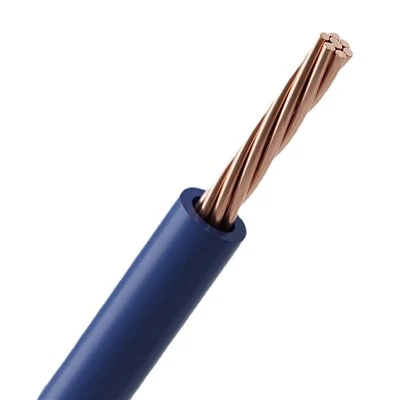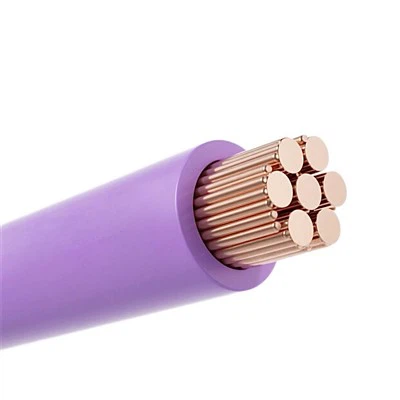

As a trusted supplier of SXL Wire, I've witnessed firsthand the critical role this wire plays in various automotive and electrical applications. One aspect that often comes up in technical discussions is the concept of group delay in SXL Wire. In this blog, I'll delve into what group delay is, why it matters in SXL Wire, and how it compares to other types of automotive wires like GPT Wire and HDT Wire.
Understanding Group Delay
Group delay is a fundamental concept in signal processing and electrical engineering. It refers to the time delay experienced by the envelope of a signal as it propagates through a medium, such as a wire. In simpler terms, it measures how long it takes for the overall shape of a signal to travel from one end of the wire to the other.
To understand group delay better, let's consider a complex signal composed of multiple frequency components. Each frequency component may travel at a slightly different speed through the wire due to the wire's electrical properties, such as capacitance, inductance, and resistance. This difference in propagation speed can cause the signal's envelope to distort, leading to a time delay between the input and output signals.
Group delay is typically expressed in units of time, such as seconds or milliseconds. It is an important parameter to consider in applications where signal integrity is crucial, such as high-speed data transmission, audio systems, and communication networks.
Group Delay in SXL Wire
SXL Wire is a type of automotive primary wire known for its high-temperature resistance, durability, and flexibility. It is commonly used in automotive wiring harnesses, engine compartments, and other applications where reliable electrical connections are required.
In SXL Wire, group delay can be influenced by several factors, including the wire's physical dimensions, insulation material, and the frequency of the signal being transmitted. For example, a thicker wire with a larger cross-sectional area may have a lower group delay compared to a thinner wire, as it offers less resistance to the flow of electrical current.
The insulation material used in SXL Wire also plays a role in determining its group delay. Different insulation materials have different dielectric constants, which affect the speed of signal propagation through the wire. For instance, a wire with a low dielectric constant insulation material may have a lower group delay compared to a wire with a high dielectric constant insulation material.
The frequency of the signal being transmitted is another important factor to consider. At higher frequencies, the skin effect becomes more pronounced, causing the current to flow closer to the surface of the wire. This can increase the wire's resistance and inductance, leading to a higher group delay.
Importance of Group Delay in SXL Wire Applications
In automotive applications, group delay can have a significant impact on the performance of various electrical systems. For example, in a high-speed data transmission system, such as an automotive Ethernet network, a high group delay can cause signal distortion and errors, leading to data loss and reduced system reliability.
In audio systems, group delay can affect the quality of sound reproduction. A high group delay can cause phase distortion, which can result in a loss of clarity and accuracy in the audio signal. This can be particularly noticeable in applications where precise timing is required, such as in surround sound systems.
In communication networks, group delay can affect the performance of wireless communication devices, such as cellular phones and Wi-Fi routers. A high group delay can cause signal interference and degradation, leading to reduced signal strength and slower data transfer rates.
Comparing Group Delay in SXL Wire with Other Automotive Wires
When it comes to group delay, SXL Wire offers several advantages over other types of automotive wires, such as GPT Wire and HDT Wire.
GPT Wire is a general-purpose automotive primary wire that is commonly used in low-voltage applications. While GPT Wire is a cost-effective option, it may have a higher group delay compared to SXL Wire due to its thinner insulation and lower temperature rating.
HDT Wire is a heavy-duty automotive primary wire that is designed for use in high-temperature applications. While HDT Wire offers excellent heat resistance, it may also have a higher group delay compared to SXL Wire due to its thicker insulation and larger physical dimensions.


In contrast, SXL Wire offers a good balance between high-temperature resistance, durability, and low group delay. Its thin wall insulation and high-quality copper conductor make it an ideal choice for applications where signal integrity is crucial, such as high-speed data transmission and audio systems.
Measuring Group Delay in SXL Wire
Measuring group delay in SXL Wire requires specialized equipment, such as a network analyzer or a time-domain reflectometer (TDR). These instruments can measure the phase and amplitude of a signal as it propagates through the wire and calculate the group delay based on the measured data.
When measuring group delay in SXL Wire, it is important to ensure that the wire is properly terminated and that the measurement is taken under the same conditions as the actual application. This can help to minimize measurement errors and ensure accurate results.
Managing Group Delay in SXL Wire Applications
To minimize group delay in SXL Wire applications, several strategies can be employed. One approach is to use a wire with a larger cross-sectional area, as this can reduce the wire's resistance and inductance, leading to a lower group delay.
Another strategy is to use a wire with a low dielectric constant insulation material, as this can increase the speed of signal propagation through the wire. Additionally, proper wire routing and termination techniques can help to minimize signal reflections and interference, which can also contribute to group delay.
In some cases, it may be necessary to use equalization techniques to compensate for group delay. Equalization involves adjusting the amplitude and phase of the signal to correct for the distortion caused by group delay. This can be achieved using specialized equalization circuits or software algorithms.
Conclusion
Group delay is an important concept to understand in SXL Wire applications. It can have a significant impact on the performance of various electrical systems, particularly those that require high-speed data transmission, accurate audio reproduction, or reliable communication.
As a supplier of SXL Wire, I'm committed to providing high-quality products that meet the needs of our customers. Our SXL Wire is designed to offer excellent high-temperature resistance, durability, and low group delay, making it an ideal choice for a wide range of automotive and electrical applications.
If you're interested in learning more about SXL Wire or have any questions about group delay, please don't hesitate to contact us. We'd be happy to discuss your specific requirements and help you find the right solution for your application. Let's start a conversation about how our SXL Wire can enhance the performance of your electrical systems.
References
- "Electrical Engineering Handbook," Third Edition, edited by Richard C. Dorf.
- "Signal Processing for Communications," Second Edition, by Bernard Sklar.
- "Automotive Electrical and Electronic Systems," Fourth Edition, by William H. Crouse and Donald L. Anglin.