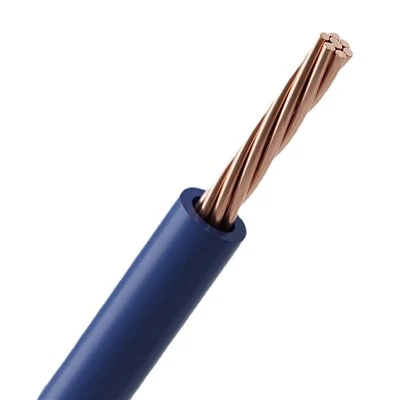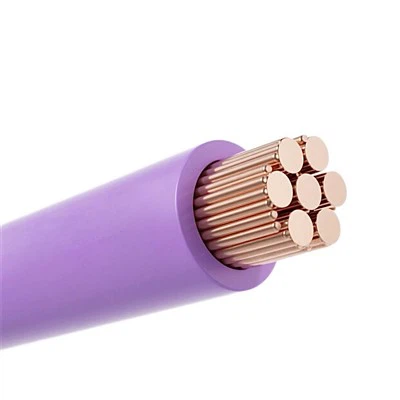

Hey there! I'm a supplier of QB - A Wire, and today I wanna chat about how temperature affects the conductivity of QB - A Wire. It's a topic that's super important, especially for those in the electrical and automotive industries where this wire is commonly used.
First off, let's quickly go over what conductivity is. Conductivity is basically a measure of how easily an electric current can pass through a material. In the case of QB - A Wire, good conductivity means that electricity can flow smoothly, which is crucial for the proper functioning of electrical systems.
Now, temperature plays a huge role in the conductivity of QB - A Wire. Generally speaking, as the temperature of the wire increases, its conductivity decreases. This is because of the way the atoms in the wire behave at different temperatures.
At lower temperatures, the atoms in the QB - A Wire are relatively still. The electrons, which are responsible for carrying the electric current, can move through the wire with less interference. It's like a highway with very few cars on it - the electrons can zip along easily.
But as the temperature rises, the atoms start to vibrate more vigorously. These vibrating atoms act like obstacles in the electron's path. The electrons keep bumping into these vibrating atoms, which slows them down. This interference makes it harder for the electric current to flow, and as a result, the conductivity of the wire goes down.
Let's look at this from a more technical perspective. The relationship between temperature and conductivity can be described by a formula. The resistivity (which is the opposite of conductivity) of a metal like the one used in QB - A Wire usually follows the equation:
ρ(T)=ρ₀[1 + α(T - T₀)]
Here, ρ(T) is the resistivity at temperature T, ρ₀ is the resistivity at a reference temperature T₀, and α is the temperature coefficient of resistivity. For most metals, α is a positive value. This means that as T (the temperature) increases, ρ(T) (the resistivity) also increases. And since conductivity is the reciprocal of resistivity, an increase in resistivity means a decrease in conductivity.
In practical applications, this temperature - conductivity relationship can have some significant impacts. For example, in automotive electrical systems, QB - A Wire is often used to transmit power and signals. If the engine compartment gets really hot, the conductivity of the QB - A Wire can decrease. This might lead to a drop in the efficiency of the electrical system. The lights might not shine as brightly, or the sensors might not work as accurately.
Another thing to consider is the long - term effect of temperature on the wire. Continuous exposure to high temperatures can cause the wire to degrade over time. The insulation around the QB - A Wire can start to break down, and the metal inside can become more brittle. This not only affects the conductivity but also poses a safety risk.
So, how can we deal with these temperature - related issues? One solution is to use proper insulation. Good insulation can help protect the wire from extreme temperatures. It acts as a barrier, reducing the amount of heat that reaches the metal core of the wire.
Another option is to use heat - resistant materials in the construction of the wire. Some manufacturers are constantly researching and developing new alloys and insulation materials that can maintain good conductivity even at high temperatures.
Now, let's compare QB - A Wire with some other types of wires. There's the QB-B Wire and the QVR Wire. Each of these wires has its own characteristics when it comes to temperature and conductivity.
QB - B Wire might have a different temperature coefficient of resistivity compared to QB - A Wire. This means that its conductivity might change at a different rate as the temperature varies. Similarly, QVR Wire is designed for specific applications, and its temperature - conductivity relationship is tailored to those needs.
When choosing between these wires, it's important to consider the operating temperature of the environment where they'll be used. If the area is likely to get very hot, you might want to choose a wire that has better heat - resistance and maintains its conductivity at high temperatures.
As a supplier of QB - A Wire, I understand the importance of providing high - quality products that can perform well under different temperature conditions. We conduct rigorous testing on our QB - A Wire to ensure that it meets the required standards for conductivity and temperature resistance.
If you're in the market for high - quality electrical wires and are concerned about how temperature might affect their performance, QB - A Wire could be a great choice. Whether you're working on automotive projects, electrical installations, or any other application that requires reliable wire, we've got you covered.
We're always open to discussing your specific needs and requirements. If you're interested in learning more about how our QB - A Wire can work for you, or if you want to place an order, don't hesitate to reach out. We can provide you with detailed product information and help you make the right decision for your project.
In conclusion, temperature has a significant impact on the conductivity of QB - A Wire. Understanding this relationship is crucial for ensuring the proper functioning of electrical systems. By being aware of how temperature affects the wire, you can take the necessary steps to mitigate any potential issues and choose the right wire for your application.
References


- "Introduction to Solid State Physics" by Charles Kittel
- "Electrical Engineering: Principles and Applications" by Allan R. Hambley