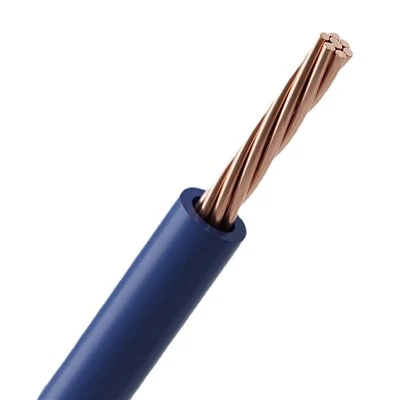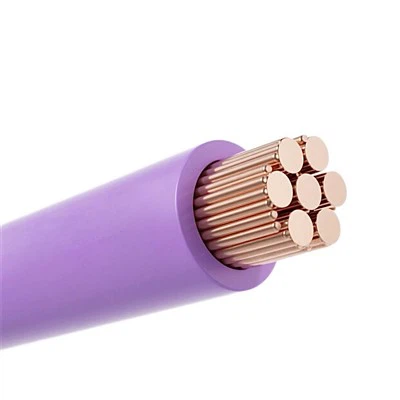

Hey there! As a multicore cable supplier, I often get asked about the maximum current a multicore cable can carry. It's a crucial question, especially for those in the electrical and electronics industries. So, let's dive right in and explore this topic in detail.
First off, what exactly is a multicore cable? Well, it's a cable that consists of multiple insulated conductors within a single outer sheath. These cables are used in a wide range of applications, from power distribution to data transmission. They're popular because they offer a convenient way to bundle multiple wires together, reducing clutter and making installations neater.
Now, when it comes to the maximum current a multicore cable can carry, there isn't a one - size - fits - all answer. Several factors come into play, and we need to consider each of them carefully.
1. Conductor Material
The material of the conductors in the multicore cable is a major factor. The most common materials are copper and aluminum. Copper is an excellent conductor of electricity. It has low resistivity, which means it allows electric current to flow through it with relatively little resistance. This low resistance results in less power loss in the form of heat. As a result, copper - core multicore cables can generally carry higher currents compared to aluminum - core cables of the same size.
Aluminum, on the other hand, is lighter and less expensive than copper. But it has a higher resistivity. So, for a given cross - sectional area, an aluminum - core multicore cable will have more resistance, and thus, it can carry less current than a copper - core cable.
2. Conductor Cross - Sectional Area
The cross - sectional area of the conductors in the multicore cable also plays a vital role. Think of it like a water pipe. A wider pipe can carry more water at a given pressure. Similarly, a conductor with a larger cross - sectional area can carry more current. As the cross - sectional area increases, the resistance of the conductor decreases according to the formula (R=\rho\frac{l}{A}), where (R) is the resistance, (\rho) is the resistivity of the material, (l) is the length of the conductor, and (A) is the cross - sectional area.
For example, a multicore cable with 6 - gauge conductors can carry more current than a cable with 12 - gauge conductors. The larger the gauge number, the smaller the cross - sectional area of the conductor.
3. Number of Cores
The number of cores in the multicore cable affects the current - carrying capacity. When multiple cores are bundled together in a single cable, the heat generated by each core can accumulate. This heat can increase the resistance of the conductors, which in turn reduces the current - carrying capacity.
If the cores are carrying currents in the same direction, the magnetic fields around them can interact, causing additional heating. So, as the number of cores in a multicore cable increases, the maximum current that each individual core can carry may need to be derated.
4. Insulation Material
The insulation material used in the multicore cable is important too. Different insulation materials have different temperature ratings. The insulation needs to be able to withstand the heat generated by the current flowing through the conductors. If the insulation gets too hot, it can degrade, leading to safety hazards such as short - circuits.


For example, some high - temperature insulation materials can allow the cable to operate at higher temperatures, which means the conductors can carry more current without overheating the insulation.
5. Ambient Temperature
The temperature of the environment where the multicore cable is installed matters a great deal. In a hot environment, the cable is already starting at a higher temperature. When current flows through the cable, additional heat is generated. If the ambient temperature is high, there is less room for the cable to dissipate this additional heat.
As a result, the maximum current that the cable can carry is reduced. For instance, a cable that can carry a certain current in a cool room may not be able to carry the same current in a hot attic.
Industry Standards
To help determine the maximum current a multicore cable can carry, there are industry standards. Two important ones are UL2919 and UL20276. These standards provide guidelines on the current - carrying capacity of multicore cables based on various factors such as conductor size, insulation type, and installation conditions.
UL2919, for example, sets out the requirements for the safety and performance of multicore cables in specific applications. It takes into account the factors we've discussed above to give a clear indication of how much current a cable can safely carry. UL20276 also provides similar information, but it may be more focused on different types of environments or applications.
Calculating the Maximum Current
In practice, calculating the maximum current a multicore cable can carry is a complex process. Electrical engineers often use tables provided by cable manufacturers or industry standards. These tables are based on extensive testing and take into account all the factors we've discussed.
Let's say you're planning to use a multicore cable in a particular application. First, you need to know the type of conductor material (copper or aluminum), the cross - sectional area of the conductors, the number of cores, the insulation material, and the ambient temperature. Then, you can refer to the appropriate table to find out the maximum current rating.
For example, if you have a copper - core multicore cable with 4 cores, each with a cross - sectional area of 4 square millimeters, and the insulation is rated for high - temperature operation, and the cable will be installed in an environment with a moderate ambient temperature, you can look up the current - carrying capacity in the relevant table.
Importance of Getting it Right
Getting the maximum current rating of a multicore cable correct is crucial. If you overload a cable by passing more current through it than it can handle, several bad things can happen. The cable can overheat, which can damage the insulation. Over time, this can lead to short - circuits, electrical fires, and equipment failures.
On the other hand, if you choose a cable with a much higher current - carrying capacity than you actually need, you're likely spending more money than necessary. So, it's all about finding the right balance.
Conclusion
So, to sum it up, the maximum current a multicore cable can carry depends on a variety of factors, including conductor material, cross - sectional area, number of cores, insulation material, and ambient temperature. Industry standards like UL2919 and UL20276 are there to help us figure out the right current - carrying capacity for different cables.
If you're in the market for multicore cables and need help determining the right cable for your application, don't hesitate to reach out. We're here to assist you in making the best choice and ensuring your electrical systems operate safely and efficiently. Contact us to start the procurement process and let's have a chat about your specific needs.
References
- Electrical Wiring Handbook
- UL2919 Standard Documentation
- UL20276 Standard Documentation