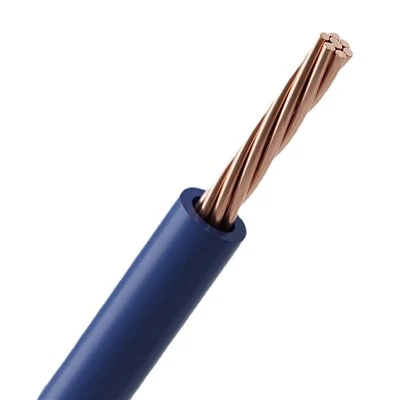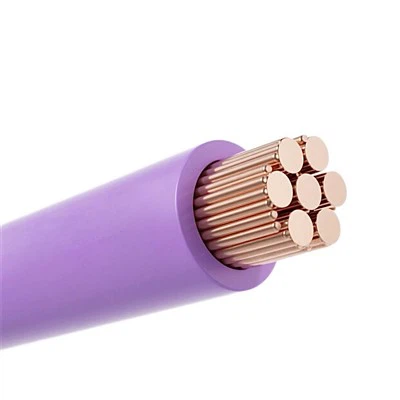

Hey there! I'm a supplier of Japanese car wires, and today I wanna chat about the differences between thick and thin Japanese car wires. It's a topic that might seem a bit technical at first, but trust me, it's super important when it comes to the performance and safety of your vehicle.
Let's start with the basics. Thick and thin wires serve different purposes in a car's electrical system. The thickness of a wire is usually measured by its gauge. In simple terms, a lower gauge number means a thicker wire, and a higher gauge number means a thinner wire.
Current - Carrying Capacity
One of the most significant differences between thick and thin Japanese car wires is their current - carrying capacity. Thick wires can handle more electrical current than thin ones. You see, when electricity flows through a wire, it generates heat. If the wire is too thin to handle the amount of current passing through it, it can overheat. This overheating can not only damage the wire's insulation but also pose a serious fire hazard.
For example, in a high - power system like the car's starter motor or the alternator, thick wires are a must. These components require a large amount of current to operate efficiently. A thick wire, such as the ones used in the EBX Japanese Standard Automotive Wire EBX Japanese Standard Automotive Wire, can carry this high current without overheating. On the other hand, thin wires are used for low - power circuits like the interior lights, radio, or dashboard indicators. The AVSS Automotive Wire AVSS Automotive Wire is often a great choice for these types of applications as it can handle the relatively small amount of current required.
Resistance
Resistance is another key factor. Resistance in a wire is inversely proportional to its cross - sectional area. That means thick wires have lower resistance compared to thin wires. When current flows through a wire with high resistance, some of the electrical energy is converted into heat. This is not only wasteful but can also lead to a drop in voltage along the wire.
In a car's electrical system, a voltage drop can cause problems. For instance, if the wire supplying power to the headlights has too much resistance, the headlights may not shine as brightly as they should. Thick wires, with their lower resistance, help to minimize this voltage drop. The AEX Automotive Wire AEX Automotive Wire is designed to have low resistance, ensuring that the electrical components receive the proper voltage.
Flexibility
Thin wires are generally more flexible than thick wires. This flexibility makes them easier to route through tight spaces in the car. In modern cars, there are a lot of components packed closely together, and the wiring needs to be able to snake around them. Thin wires can be bent and twisted more easily without breaking or damaging the insulation.


However, this doesn't mean that thick wires are completely inflexible. Manufacturers of Japanese car wires have developed techniques to make thick wires more pliable. But in general, if you're dealing with a complex wiring layout where the wires need to be bent at sharp angles, thin wires are the way to go.
Cost
Cost is also a consideration. Thick wires are more expensive than thin wires. This is because they require more raw materials, such as copper, to manufacture. Additionally, the manufacturing process for thick wires can be more complex.
For car manufacturers, the cost of wiring can add up quickly. That's why they carefully choose the right wire thickness for each application to balance performance and cost. As a supplier, I understand the importance of providing cost - effective solutions. We offer a range of Japanese car wires, from thin, budget - friendly options to thick, high - performance wires, so that our customers can choose the best fit for their needs.
Durability
When it comes to durability, thick wires have an edge. The thicker insulation and larger conductor size make them more resistant to physical damage. They can withstand more wear and tear, such as being pinched or rubbed against other components in the car.
Thin wires, while more flexible, are more vulnerable to damage. Their insulation can be easily scratched or punctured, which can lead to short circuits or electrical problems. However, modern thin wires are made with high - quality insulation materials that offer good protection.
Installation
Installation of thick and thin wires also differs. Thick wires are heavier and stiffer, which can make them a bit more challenging to install. You need to use larger connectors and more force to bend and route them. But once they're in place, they tend to stay put.
Thin wires, on the other hand, are lighter and more flexible, making them easier to handle during installation. They can be quickly routed through small spaces and connected with smaller connectors.
In conclusion, the choice between thick and thin Japanese car wires depends on several factors, including the power requirements of the circuit, the available space for wiring, the budget, and the desired level of durability. As a supplier, I'm here to help you make the right decision. Whether you need a thin wire for a low - power interior circuit or a thick wire for a high - power engine component, we've got you covered.
If you're in the market for Japanese car wires, I encourage you to get in touch with us. We can provide you with detailed information about our products and help you find the perfect wire for your application. Let's work together to ensure your vehicle's electrical system runs smoothly and safely.
References
- Automotive Electrical Systems Handbook
- Japanese Automotive Wiring Standards Manual