


In the ever - evolving landscape of telecommunications, the choice of wires and cables plays a pivotal role in ensuring seamless communication. As a supplier of FLRY - A Wire, I am often asked whether this particular wire can be used in telecommunications applications. In this blog, we will delve into the characteristics of FLRY - A Wire and explore its potential suitability for telecommunications.
Understanding FLRY - A Wire
FLRY - A Wire is a type of wire that has been designed with specific properties to meet certain industry requirements. It typically features a high - quality insulation material that provides excellent electrical insulation. This insulation helps to prevent short - circuits and signal interference, which are crucial factors in any electrical or electronic application.
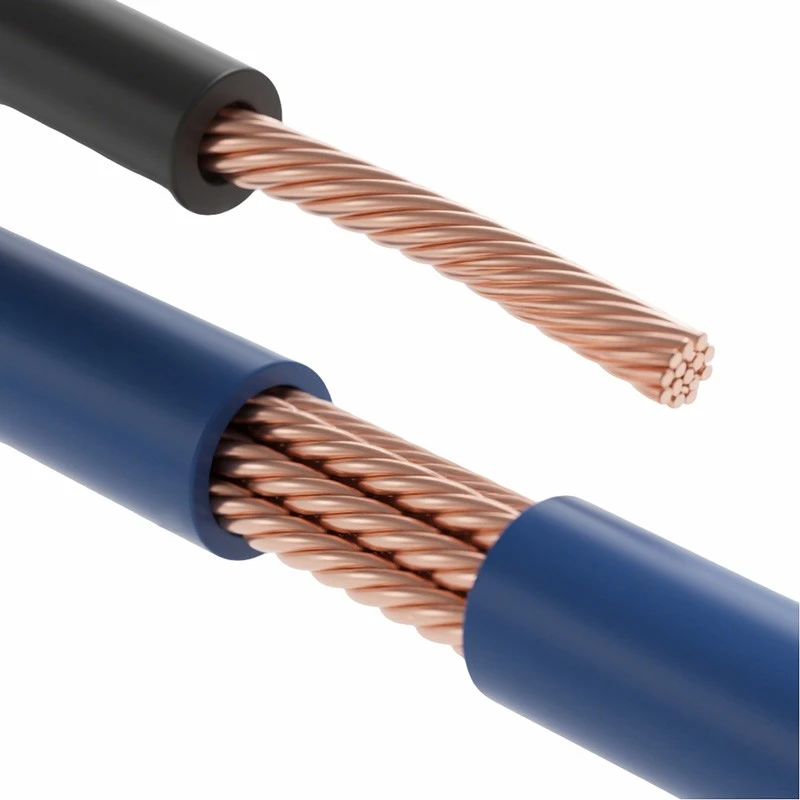
The construction of FLRY - A Wire usually involves a conductor made of high - purity copper or aluminum. Copper is a popular choice due to its high electrical conductivity, which allows for efficient transmission of electrical signals. The conductor is then surrounded by the insulation layer, which can be made of materials such as PVC (Polyvinyl Chloride) or other specialized polymers. These insulation materials offer good mechanical protection as well as resistance to environmental factors such as moisture, heat, and chemicals.
Key Requirements in Telecommunications Applications
Telecommunications applications have a set of stringent requirements that any wire or cable must meet to be considered suitable. Some of the key requirements include:
Signal Integrity
One of the most important aspects of telecommunications is the ability to transmit signals accurately and without distortion. This means that the wire used must have low attenuation, which is the loss of signal strength as it travels through the wire. A wire with high attenuation can lead to a weak or distorted signal at the receiving end, resulting in poor call quality, slow data transfer rates, or even complete signal loss.
Bandwidth
With the increasing demand for high - speed data transmission, such as in 5G networks and fiber - to - the - home (FTTH) systems, the wire must be able to support a wide bandwidth. Bandwidth refers to the range of frequencies that the wire can carry. A wire with a higher bandwidth can transmit more data simultaneously, enabling faster communication.
Resistance to Interference
Telecommunications systems are often exposed to various sources of electromagnetic interference (EMI) and radio - frequency interference (RFI). These interferences can disrupt the signal and cause errors in data transmission. Therefore, the wire must have good shielding properties to protect the signal from external interference.
Durability
Telecommunications infrastructure can be installed in a variety of environments, including underground, in buildings, and outdoors. The wire must be able to withstand the physical stresses associated with installation and long - term use, as well as environmental factors such as temperature variations, humidity, and exposure to sunlight.
Analyzing FLRY - A Wire for Telecommunications
Signal Transmission
The high - purity conductor in FLRY - A Wire, especially if it is made of copper, provides good electrical conductivity. This means that it can transmit electrical signals with relatively low attenuation, which is beneficial for maintaining signal integrity. However, the specific attenuation characteristics of FLRY - A Wire will depend on its gauge (thickness) and the frequency of the signal being transmitted. In general, thinner wires may have higher attenuation at higher frequencies.

Bandwidth
The insulation material used in FLRY - A Wire can have an impact on its bandwidth capabilities. Some specialized insulation materials can support a wider range of frequencies, allowing for higher - speed data transmission. However, compared to some dedicated telecommunications cables, the bandwidth of FLRY - A Wire may be limited. It may be more suitable for low - to - medium - speed telecommunications applications, such as in some local area networks (LANs) or basic voice communication systems.
Interference Resistance
The insulation of FLRY - A Wire provides some level of protection against external interference. However, if the wire is to be used in an environment with high levels of EMI or RFI, additional shielding may be required. There are options to add shielding layers to the wire during the manufacturing process, which can significantly improve its resistance to interference.
Durability
The mechanical and environmental resistance of FLRY - A Wire makes it suitable for a variety of installation environments. The insulation material protects the conductor from moisture, heat, and chemicals, ensuring long - term reliability. However, in harsh outdoor environments or areas with high mechanical stress, additional protective measures may be needed.
Comparing with Similar Wires
When considering the use of FLRY - A Wire in telecommunications, it is useful to compare it with similar wires. For example, the German FLX - A Car Wire is designed primarily for automotive applications. While it may have some similarities in terms of construction and insulation, its performance characteristics may not be optimized for telecommunications. Automotive wires are typically designed to withstand the vibrations, temperature variations, and electrical loads specific to vehicles, rather than the high - speed signal transmission requirements of telecommunications.
On the other hand, FLRY - B Wire and FLR9Y - A Wire may have different insulation materials or conductor configurations. These differences can affect their performance in telecommunications applications. For instance, FLRY - B Wire may have a different insulation thickness or composition, which could impact its attenuation and bandwidth characteristics.
Case Studies and Real - World Applications
There have been some cases where FLRY - A Wire has been successfully used in telecommunications applications. In a small - scale office LAN, for example, FLRY - A Wire was used to connect computers and network devices. The low - to - medium - speed data transmission requirements of the LAN were well - met by the wire's performance. The wire's durability also ensured that it could withstand the normal wear and tear associated with office use.
In a rural area where the demand for high - speed internet was not extremely high, FLRY - A Wire was used for basic voice and low - speed data communication. The wire was able to provide a reliable connection, and its resistance to environmental factors made it suitable for outdoor installation.
Conclusion
In conclusion, FLRY - A Wire can be used in certain telecommunications applications, especially those with low - to - medium - speed requirements. Its good electrical conductivity, insulation properties, and durability make it a viable option for some LANs, basic voice communication systems, and rural telecommunications setups. However, for high - speed applications such as 5G networks or large - scale data centers, additional considerations may be needed, such as adding shielding or using a wire with higher bandwidth capabilities.
If you are considering using FLRY - A Wire in your telecommunications project, I encourage you to reach out for further discussion. We can provide more detailed technical specifications and help you determine if FLRY - A Wire is the right choice for your specific needs. Contact us to start the procurement and negotiation process, and let's work together to find the best solution for your telecommunications infrastructure.
References
- Telecommunications Engineering Handbook, various editions
- Industry standards for wire and cable performance in telecommunications
- Technical documentation provided by wire manufacturers



